Last updated November 17, 2026



Free written scope consultation - allowances, timeline, and change-order rules on paper before a single trade is scheduled
Driveway & Pavers Warning Signs Every Homeowner Should Know
The paver that rocked under your tire six months ago and then seemed to settle down didn’t settle. The base beneath it shifted to accommodate the movement, and more pavers are following. We’ve pulled apart driveways in Doral where one “harmless” rocker had quietly loosened a twelve-paver section by the time the homeowner called us. The trouble with paver failure is that it never starts with a crack you can see from the street. It starts with small things you can talk yourself out of noticing. This guide names those early signals, tells you which ones can wait a season and which need attention now, and gives you a few tests you can run with your own hands and your own car.
Quick Answer
The warning signs that matter most on a paver driveway are consistent rocking (not a one-time wobble from a pebble), joint sand washing out along a single line rather than evenly, edge pavers spreading past their restraint, dark staining in joints after dry weather, and soft spots you can feel through the car. Any one of these means the base layer is moving, and base problems only get more expensive the longer they sit. Surface cleaning is cosmetic. Base failure is structural.
Styles & brands we work with
- Kitchen remodeling
- Bathroom remodeling
- Home additions & ADU
- Roofing
- Windows & doors
- Driveway & pavers
- Fence
Table of Contents
- The Rocking Paver: One-Time Wobble vs. Real Movement
- Missing Joint Sand in Lines, Not Uniformly
- Edge Restraint Failure and the Fan-Shaped Spread
- Dark Staining in Joints During Dry Weather
- The Vehicle-Load Test for Soft Base
- Depressions, Ponding, and Doral’s Rainy Season
- What Paver Repair Actually Costs in Doral
- When to Call a Professional
The Rocking Paver: One-Time Wobble vs. Real Movement
A single paver that tips once and then stops is usually a pebble or a clump of joint sand wedged under one corner. A paver that rocks every time you step on it, or every time your right-front tire rolls over it, is sitting on a void. The distinction matters because the first one is a five-minute fix and the second one is a symptom of a base that has lost bearing support.
Here’s the press test. Stand on the paver with your weight on one foot and rock your heel up and down. If you feel the paver pivot cleanly on a high point and return to level, that’s a surface obstruction. If you feel the paver drop slightly lower with each rock, or if you can see neighboring pavers shift when you press down, the bedding layer is gone and the base underneath is settling. Do this test in dry weather. Wet pavers can hide movement by sticking to the sand beneath them.
In Doral, we see the second kind most often on driveways more than a decade old where the original installation was over a thin base. The soil here holds a lot of water in the wet months and then drains hard. That cycle pumps fine material out from under the pavers over the years, and the voids grow in the traffic lanes first. If your rocking pavers form a rough line down the middle of the driveway, that’s a compaction problem, not a coincidence.
Missing Joint Sand in Lines, Not Uniformly
Joint sand always migrates a little. Wind blows it, tires kick it, a heavy rain moves some. What you should watch for is sand that disappears in a specific line or channel while the rest of the driveway still looks filled. That pattern is not weather wear. It’s a sign that a subsurface drainage channel has formed beneath the base and is pulling sand down through the joints the way a drain pulls water. In our experience, a single joint running dry along a 20-foot stretch of a Doral driveway almost always traces back to a low spot where storm runoff collects before it leaves the lot.
Run this check on your own driveway:
- Wait at least three dry days after the last rain.
- Walk the joints with a flashlight held low, at an angle.
- Look for joints that read darker or deeper than their neighbors in one continuous run.
- Poke a joint with a screwdriver blade. If it sinks more than a half-inch before catching, there’s no sand in there and probably a void below.
- Note where the joints run dry and check whether the driveway slopes toward that area.
Sand disappearing in a line is almost always an early warning. It’s the cheapest stage to fix: re-sanding and correcting the low spot before the base washes out. Wait two seasons and the repair widens into a full section rebuild.
Edge Restraint Failure and the Fan-Shaped Spread
Every paver driveway needs an edge restraint: a concrete curb, a plastic edge, or a compacted border that keeps the field of pavers locked tight against lateral pressure. When that restraint fails, pavers at the edge start pushing outward. First you see a gap open between the border and the driveway. Then the edge pavers fan out at angles instead of holding a straight line. By the time it’s a fan, you’re looking at reinstalling a wide section, not just resetting one row.
Look for these signs along the driveway edge closest to the lawn or the street:
- Pavers that have crept past the original border line by a quarter-inch or more.
- Visible gaps between the border paver and the field pavers.
- Border pavers tilting outward with a visible seam underneath.
- Soil or turf pushed up against the paver edge from the driveway side, which means the driveway is moving into the lawn.
- Grass growing in a widening seam where there used to be a tight joint.
Doral’s sandy soil and heavy wet season make edge failure more common than it is up north, especially on driveways that were installed without a poured concrete edge and rely on plastic edging stakes alone. The fix is a proper concrete restraint or a reset edge. Once you see the fan, it’s time to call.
Dark Staining in Joints During Dry Weather
Staining after rain is normal. Staining on a dry day, days after the last rain, is telling you something is coming up from below. Dark joints that stay damp when the rest of the driveway is bone dry can mean hydrostatic pressure: groundwater pushing up through the base and finding its way out through the joints. In Doral, where the water table sits close to the surface in low-lying parts of the city, hydrostatic pressure after a heavy wet season can lift and stain a paver field in a pattern you can actually trace.
Here’s the check: on a dry afternoon, press a paper towel into the stained joint. If it comes up damp, the moisture is coming from below. If it comes up dry but discolored, it’s just organic staining from iron or algae and it’s cosmetic. Wet tells you there’s water under there. Dry tells you there isn’t.
Damp staining usually comes with a faint depression in the same area. That’s the water lifting and loosening the bedding sand under the pavers. Left alone through one more wet season, it will show up as a real hollow. If you see a wet dark patch that doesn’t dry out in a week of sun, take a photo and get it looked at. A re-sand and a drainage correction now saves you a section rebuild later.
The Vehicle-Load Test for Soft Base
You can find soft base before it becomes a visible depression. All it takes is your own car, a piece of chalk, and about ten minutes. This test is safe: you’re rolling over the driveway slowly, not driving hard. If you have any reason to think the base is badly compromised, don’t do it and call a professional for an inspection instead.
- Pick a dry afternoon, three or more days after rain.
- Mark a starting spot on the driveway with a chalk line or a piece of tape at the tire track.
- Roll forward about ten feet at walking pace, then stop. Rock gently side to side and listen.
- Roll forward another ten feet, stop, and rock again. Do this the full length of the driveway.
- Note sections where the paver surface crackles, clicks, or drops under the tire more than the rest.
- Go back and put a straight-edge (a 4-foot level works) across the tire track. If you see a dip of more than a quarter-inch, the base has failed in that spot.
Every Doral driveway we’ve sectioned for base failure had a spot the owner could have found with this test a year before. Soft base is not an aesthetic problem. It will fail.
Depressions, Ponding, and Doral’s Rainy Season
A paver driveway that ponds water after a storm is telling you it’s no longer flat. Water pooling in one or two sections after rain means the paving field has settled there, and the settled area almost always runs deeper than the visible surface. Small dips are normal in any paver field. Ponds that stand for more than a day after rain, especially during Doral’s wet months from June through September, are not.
Check these signs after your next storm:
- Water standing in any dip more than 24 hours after rain stops.
- Mosquito breeding in standing water on the pavers (a reliable indicator in Doral’s climate).
- Visible dips or dark low spots in the tire track lines.
- Grass or weeds growing in damp joints next to the dip.
Ponding does double damage. It softens the base further from the top down, and it adds water weight where the base is already weakest. If you’ve been telling yourself the pond is just the way the driveway was built, take a close look at the joint pattern. If the pond sits over dry-channel joints, the two problems are one problem and both are base related.
What Paver Repair Actually Costs in Doral
Costs vary with the state of the base and the size of the section involved. These are the ranges we see for common repair categories in the Doral market:
- Re-sanding and joint repair (single area): typically a few hundred dollars for a small section.
- Resetting 10 to 20 pavers with fresh bedding: usually into the low four figures depending on access and match.
- Edge restraint install or rebuild: often priced per linear foot and worth doing once, correctly.
- Section rebuild with base correction: the largest jump in cost, because the old bedding is removed and compacted gravel goes in to spec.
- Full driveway re-lay: reserved for the worst cases where base failure runs length-wise through the field.
The number to remember is that each step up this ladder is roughly two to three times the cost of the step below. Re-sand first, reset second, rebuild third, full re-lay last. Every season you wait on a real problem moves you up a step. If you want to see what a full install includes for comparison, look at our Driveway & Pavers in Doral page. And if your outdoor project is starting to cover more ground than pavers alone, a structural addition often pairs with hardscape work; see Home Additions & ADU in Doral for that side of things.
When to Call a Professional
Call us when your pavers rock consistently in traffic lanes, when joint sand has disappeared along a line rather than all over, when edge pavers have fanned past their restraint, when damp staining doesn’t dry out in sun, or when your driveway ponds for more than a day after rain. Those five scenarios are base problems, and base problems are the ones that go from a small repair to a full section rebuild inside a couple of seasons. Small cosmetic fixes like a single loose border paver or a uniform re-sand are within reach for a handy homeowner. Base work isn’t. It needs proper excavation, compacted gravel, correct bedding sand, and a restraint that will actually hold, and the difference between a repair that lasts and one that doesn’t shows up in the base every time. Barrett & Sons Construction Doral offers free estimates in Doral. Call (833) 734-5128 to schedule one.
See the difference
 Before
 After
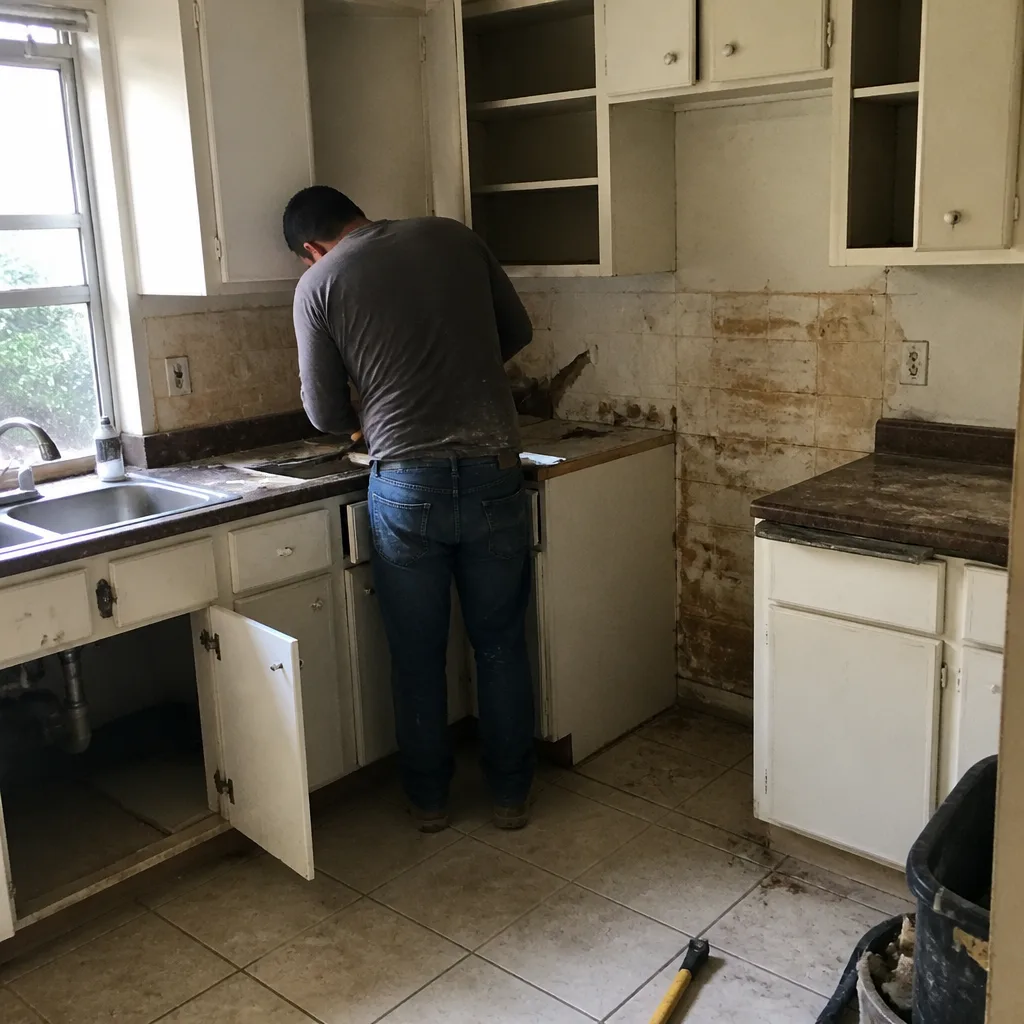 Before
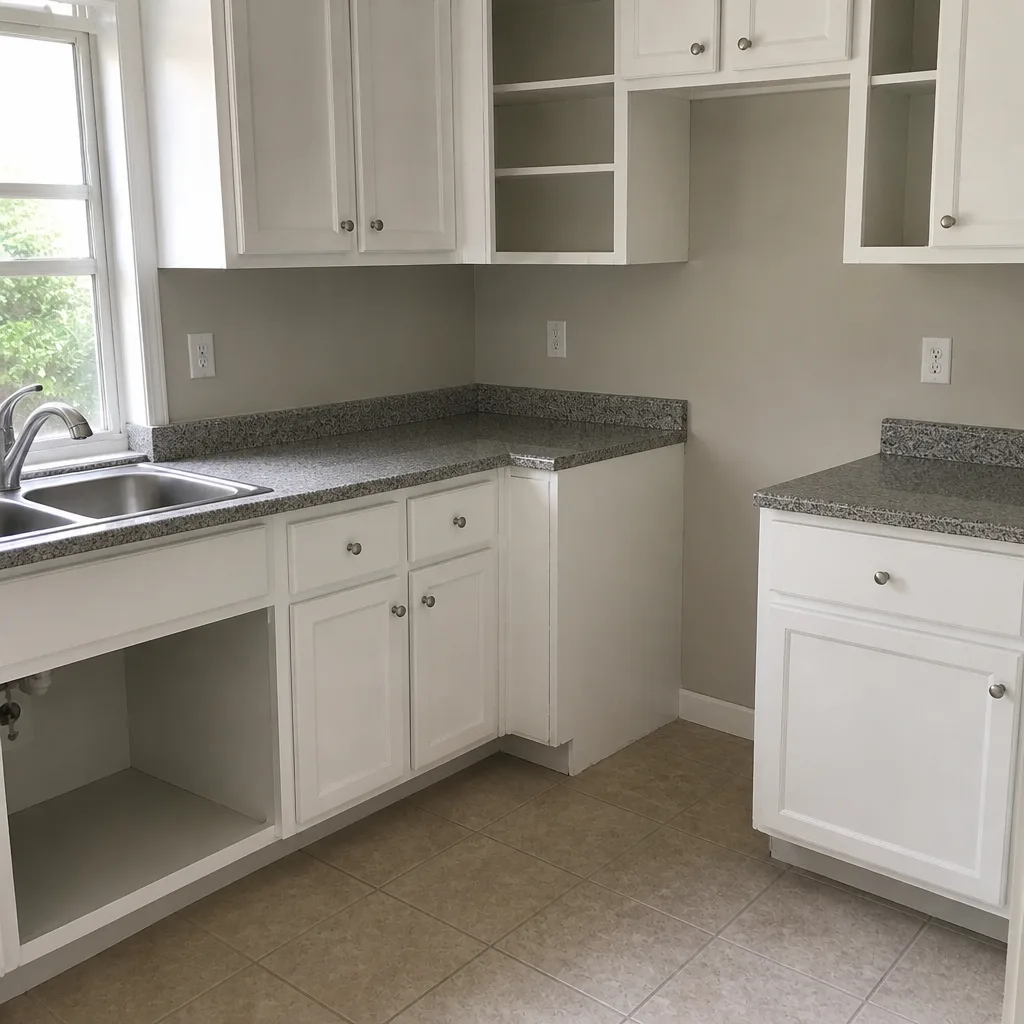 After
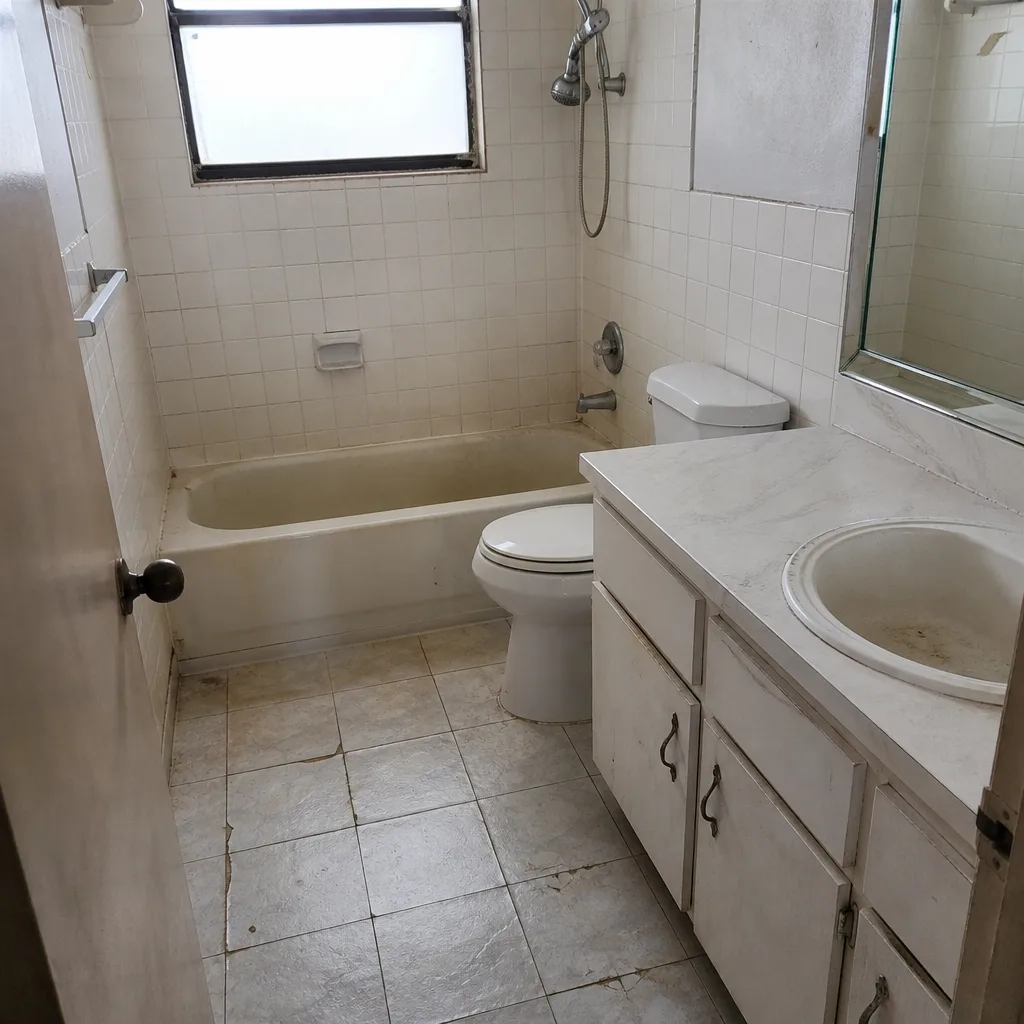 Before
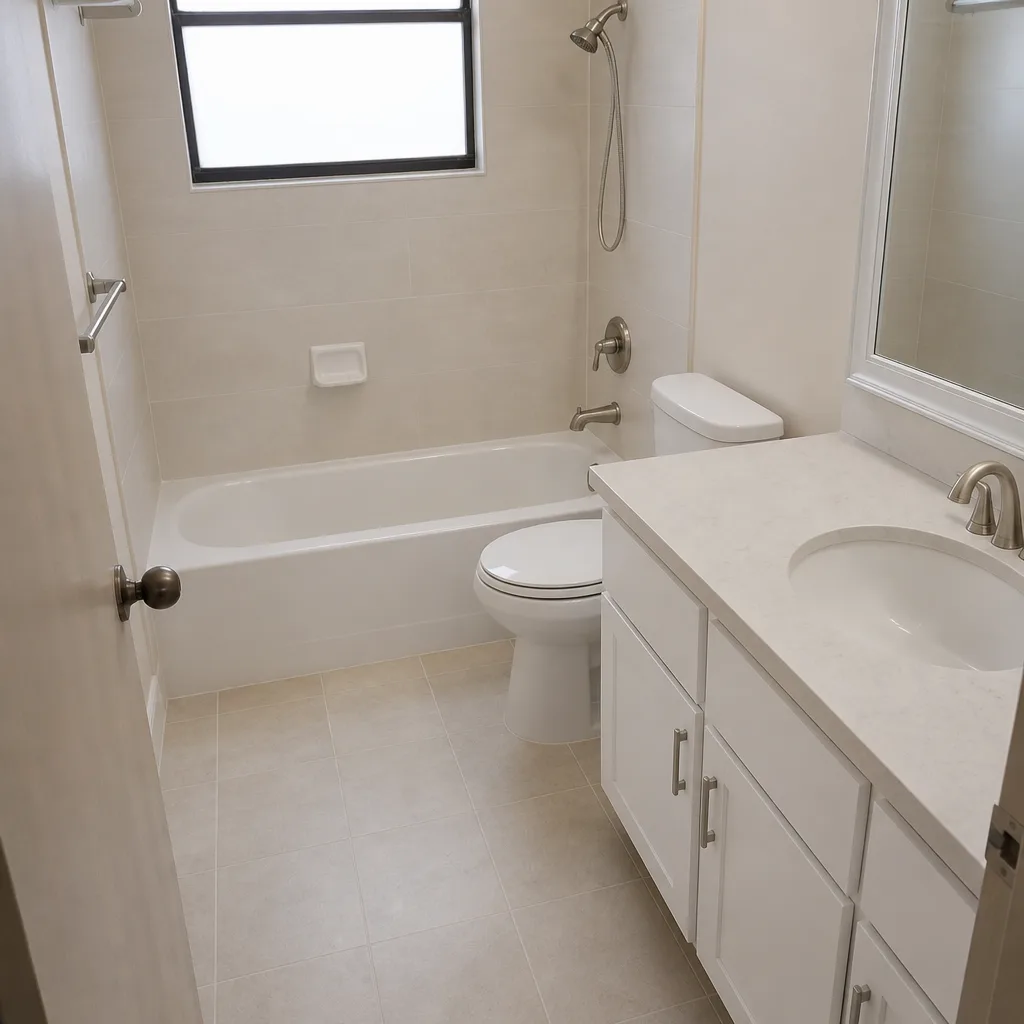 After
Common Mistakes to Avoid
- Re-sanding over a soft base. Fresh sand makes the driveway look new for a season, then disappears into the same voids. Fix the base first or the sand just follows the water.
- Ignoring the edge. A lot of Doral driveways fail from the edge inward, because the plastic edging was never replaced with a concrete restraint. Repairs on a failing edge undo themselves in a year.
- Power-washing joints aggressively. A hard blast strips joint sand out of dry channels and speeds up the exact failure you’re trying to prevent. Wash the surface, not the joints.
- Treating dark staining as cosmetic without testing. A dry paper towel means you can relax. A damp one means you have water moving under the base.
- Sealing over a moving driveway. Sealer traps moisture under a failing field and hides the joints you’d otherwise be diagnosing. Seal on a sound base, not on a failing one.
- Skipping the freeze-frame check on a house purchase. If you’re buying a Doral home with a paver driveway, walk it after a heavy rain before you close. A driveway that looks fine dry can pond and drop noticeably once it’s wet.
- Letting one fanned edge sit for a season. The fan widens fast. What starts as six pavers becomes thirty if you leave it.
Frequently Asked Questions
A one-time wobble from a pebble resolves after the paver settles back onto its bedding and stops moving under pressure. A failing paver keeps rocking every time you step on it and often causes neighboring pavers to shift when you press down. If the movement is repeatable and the pavers around it move slightly too, the base is the problem. Call (833) 734-5128 for a free driveway inspection if you’re not sure which case you have – estimates are free.
Sand missing in a continuous line is a real problem and usually points to a drainage channel forming under the base. Uniform sand loss across the whole driveway is normal weathering. Sand that disappears along a single joint over many feet means water is pulling it through, and the base needs to be checked. Call (833) 734-5128 to get a written opinion before you re-sand.
Edge failure starts with a visible gap opening between the border paver and the field, then progresses to border pavers tilting outward and pavers fanning at angles instead of holding a straight line. In Doral, the failure usually shows up on the side facing the lawn or the street, because that’s where runoff pressure builds. Once the fan starts, the restraint needs to be rebuilt. Call (833) 734-5128 for a free estimate on edge repair.
Damp joints during dry weather usually mean water is coming up from below through hydrostatic pressure, especially in low-lying parts of Doral where the water table sits close to the surface. Press a paper towel into the joint on a sunny afternoon. If it comes up wet, the moisture is under the driveway. If it comes up dry and just discolored, that’s cosmetic algae or iron staining. If it’s wet, call (833) 734-5128 to get it looked at – the correction is cheaper the earlier you start.
Yes, in most cases. Pavers themselves are durable and can be lifted, cleaned, and re-laid over new base and bedding. What usually needs replacing is the compacted gravel base, the bedding sand, and the edge restraint. Paver breakage during removal is typically low when the job is done correctly. If you’ve got a failing base and want a written scope, call (833) 734-5128 – the estimate is free and every line item is spelled out before work starts.
Whether a permit is required depends on the scope and where the driveway meets the street right-of-way, and we check that on every driveway and hardscape job. On any job where a permit applies, we pull it and get the inspections signed. The inspector working for the town is working for you, not for us, and that’s exactly how a project should be handled. Call (833) 734-5128 and we’ll tell you what your specific project requires.
The Bottom Line
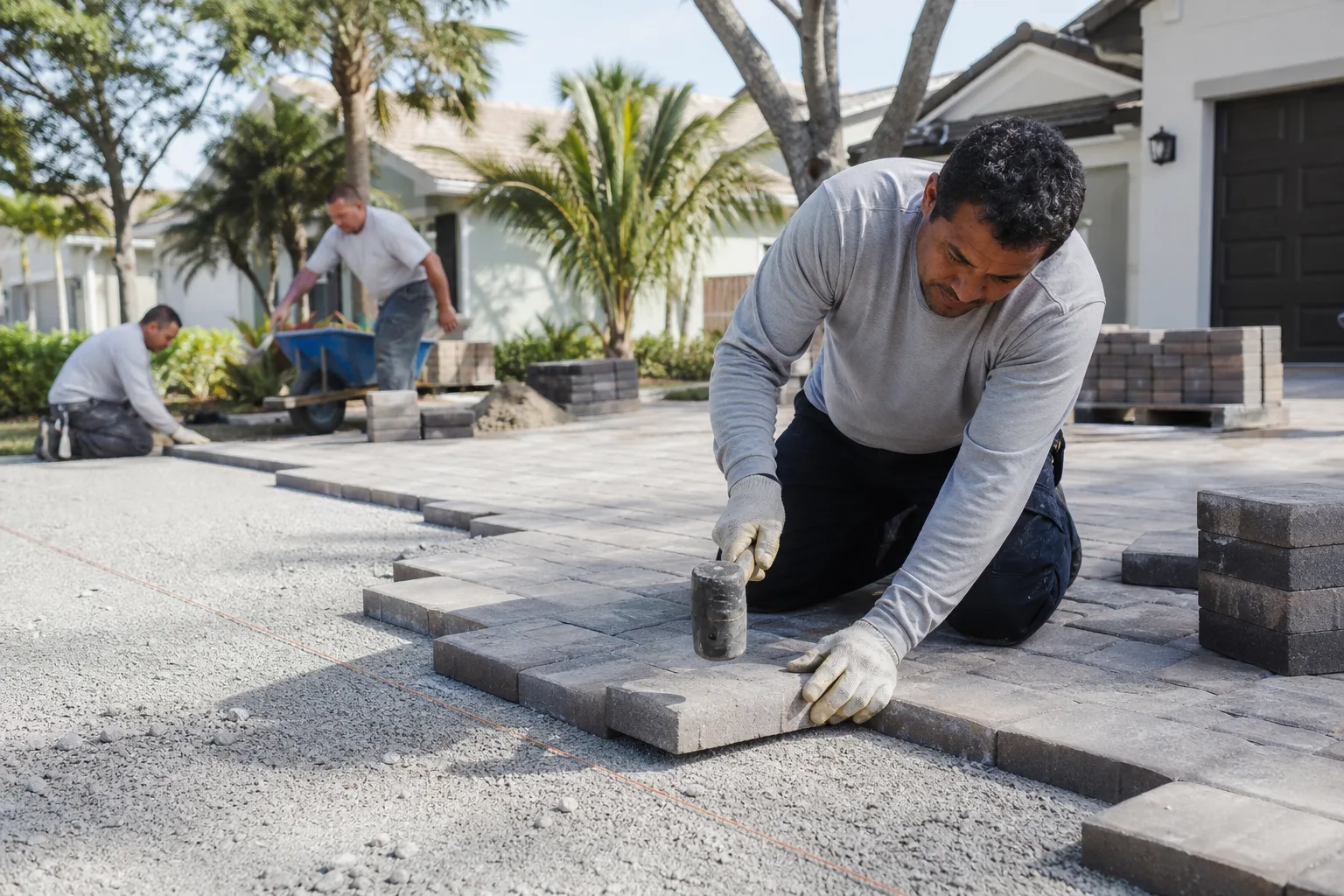
Paver driveways fail slowly and then all at once. The signs are there before the failure: a paver that rocks consistently, sand missing in a line, an edge starting to fan, joints staying wet when nothing’s rained, a dip you can feel through your own tires. Every one of those is a base problem, and every one is cheaper to fix the season you notice it. Surface maintenance keeps a sound driveway looking new. Only base work keeps a failing one from becoming a re-lay. If you’re in Doral and want someone to look at it with you, our team has seen every version of this problem in the city, we pull permits on every eligible job, and every change order arrives in writing before a nail or paver moves. Call (833) 734-5128 for a free estimate, or start with our Barrett & Sons Construction Doral home page to see how we work. If your project touches the fence line while you’re at it, our Fence Installation in Doral page covers that side of the property.
Written by the team at Barrett & Sons Construction Doral.