Last updated November 17, 2026


Free written scope consultation - allowances, timeline, and change-order rules on paper before a single trade is scheduled
DIY vs Professional Bathroom Remodeling: What’s Safe to Do Yourself
Painting the vanity yourself is smart. Re-routing the drain line yourself in Miami-Dade County is a code violation that will surface at the worst possible time, like when you try to sell the house. The real DIY question in a bathroom remodel isn’t “can I do this?” It’s “which parts can I do without voiding my permit, my insurance, and the warranty on the work that comes after?” That’s the line this guide draws, trade by trade. We’ve walked hundreds of Doral bathrooms and seen what happens when someone crosses it by accident. Here’s how to stay on the right side of it.
Quick Answer
You can safely DIY the finish work: painting, cabinet hardware, mirrors, light fixture swaps in an existing box, regrouting, and swapping a vanity top on the same connections. You should not DIY plumbing rough-in, electrical circuit changes, or structural work. In Florida and especially Miami-Dade, those require a licensed contractor and a pulled permit, and unpermitted work can block a home sale or void your insurance. Tile and drywall land in the middle, doable if you’re patient but risky on older Doral subfloors.
Styles & brands we work with
- Kitchen remodeling
- Bathroom remodeling
- Home additions & ADU
- Roofing
- Windows & doors
- Driveway & pavers
- Fence
Table of Contents
- The Trade-by-Trade Breakdown: What’s Safe and What Isn’t
- Miami-Dade Permit Rules That Catch DIYers Off Guard
- How Unpermitted Work Affects a Home Sale
- Why DIY on One Phase Can Void the Warranty on the Next
- Hidden Risks in Older Doral Homes
- The Real Cost Savings: Finish Work vs. Callback Risk
- Common Mistakes to Avoid
- When to Call a Professional
The Trade-by-Trade Breakdown: What’s Safe and What Isn’t
Not every trade in a bathroom carries the same risk. Some are pure cosmetics. Some are life-safety. And some will look fine on the day you finish and fail quietly two years later. Here’s how we’d draw the line in a Doral home.
Demo. Removing a vanity, pulling up flooring, or tearing out an old shower surround is usually safe to do yourself, with a few cautions. Turn off the water at the main first. Cap any open lines before you leave them overnight. And stop the moment you find soft subfloor, black mottling, or a smell you can’t place.
Electrical. Swapping a light fixture or a fan cover on an existing circuit is a reasonable weekend job. Adding a circuit, moving a GFCI, or running new wire in a wet zone is not. Florida requires a licensed electrician for that work, and the inspection has to pass before the wall closes back up.
Plumbing rough-in. This is the one DIYers most often underestimate. Moving a drain, adding a second sink, or re-sloping a waste line falls under the Florida Building Code and the Florida Plumbing Code, and in Miami-Dade it needs a permit and a licensed plumber. A slow leak from a badly glued joint can rot a floor for a year before anyone notices.
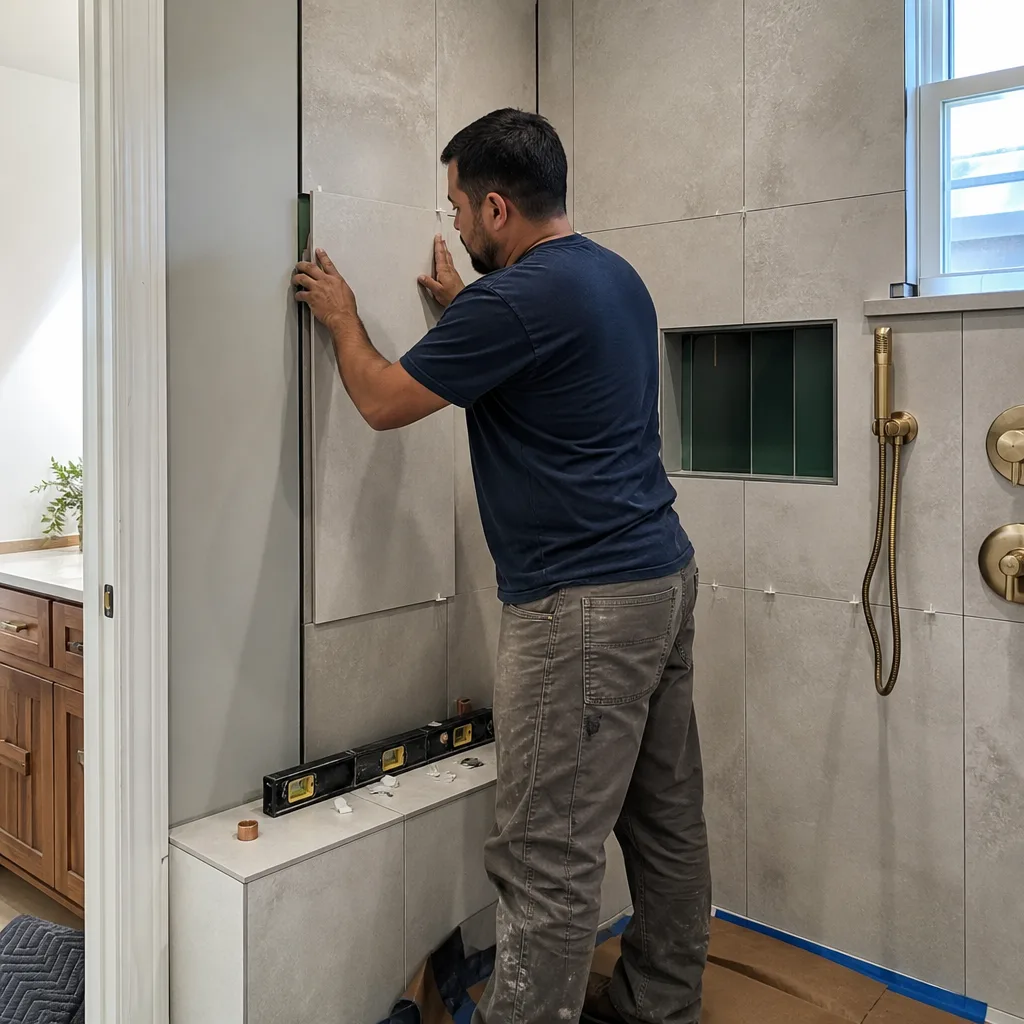
Tile. Setting tile is a genuine skill but not a licensed trade. You can do it. Whether you’ll want to after the first shower wall is a different question. What matters most is the waterproofing behind the tile, not the tile itself.
Drywall. Hanging and finishing drywall is safe to DIY and forgiving of slow work. The catch is green board versus cement board: the wrong backer in a Doral shower fails fast in our humidity.
Finish work. Paint, trim, hardware, mirrors, caulk, and a new vanity top dropped on the existing connections. This is where DIY actually pays off.
Miami-Dade Permit Rules That Catch DIYers Off Guard
Miami-Dade County runs one of the strictest permitting systems in the country. That’s not a knock. It’s a fact that saves a lot of homeowners from painful surprises, if they know the rules going in.
Here’s what typically trips people up:
- Almost all bathroom work on plumbing, electrical, or structural elements needs a permit. Cosmetic-only work like paint, cabinet repainting, or a mirror swap usually doesn’t. But a new shower pan, a relocated toilet, or a new circuit does.
- A permit requires a licensed contractor in the specific trade. Homeowners can sometimes pull permits for their own primary residence, but the county can and does inspect the work, and any trade item needs a licensed signature at close-out.
- Inspection timing matters. Rough-in inspections happen before the wall closes. If you’ve already tiled over the plumbing, the inspector can require you to open it back up. That’s a real cost.
- Some work triggers a full scope review. If the total scope crosses certain thresholds, the county may require additional drawings or impact review. Ballpark check: if the work adds square footage or changes a load-bearing wall, expect more paperwork.
We pull permits on every eligible job because we’ve seen what happens when a homeowner is told “you really don’t need one.” That phone call from a real estate attorney three years later is never fun. The permit inspector works for you, not for the contractor. That’s exactly why we like him.
How Unpermitted Work Affects a Home Sale
Here’s the part of the DIY conversation no one likes to have until they need to. When you sell a home in Doral or anywhere in Miami-Dade, the title company and the buyer’s inspector will look at the record. If work exists in the house that doesn’t exist in the permit file, you have a problem. The most common outcomes:
- The buyer’s lender refuses to close until the work is either permitted retroactively (with plan review and inspections) or torn out and redone.
- The buyer’s inspection flags it as a defect, and the seller ends up crediting the buyer for the cost of a redo.
- An insurer can deny a claim on water damage from a shower that was never permitted and never inspected.
Retroactive permitting is possible but slow. You’ll need to open walls, expose the work, and pass inspection on something that may have been done ten years ago. If the work doesn’t pass, you tear it out. A $600 DIY shower rough-in can cost $6,000 to unwind.
Why DIY on One Phase Can Void the Warranty on the Next
This is the warranty story nobody tells you until it’s too late. When we finish a bathroom remodel, we back the whole job with our 90-Day Done Right Promise, written on every contract. That promise covers our work. It cannot cover something a homeowner did to the phase we’re supposed to be warranting next.
A real example: we install a new shower valve and tile surround. Two weeks later, the homeowner decides to add a second showerhead themselves. They open the wall, tie into the valve, and reseal. When a leak develops behind the wall three months later, the question becomes whether the leak came from our work or theirs. The warranty has to pause. That’s not us being difficult. It’s just what happens when two people touch the same wall.
Same story with flooring. If we set a new tile floor over a properly prepped subfloor and the homeowner later pulls up a run of tile to add a heated mat, the warranty on the surrounding floor is now in question. The rule of thumb is simple: decide the DIY scope before work starts, not after. Scope in writing, allowances in writing, change orders in writing. That’s the only way the warranty stays clean on both sides.
Hidden Risks in Older Doral Homes
Doral is a young city, but “young” is relative. Homes in Doral built in the late 1980s and 1990s are now thirty-plus years old, and a lot of what’s behind the walls in those houses is nothing like what a big-box store video assumes.
Cast iron and galvanized drains. Many older Doral homes still have cast iron drain lines in the main stack. When a DIY vanity swap touches that stack, old cast iron shatters. If you’re re-routing a drain and you feel the pipe flex more than it should, stop and call. The project just changed scope.
Aluminum branch wiring. Some mid-century and early 1970s homes in South Florida were wired with aluminum branch circuits. Aluminum wiring doesn’t fail on its own, but it fails at connections, especially older connections. Adding a new fixture to that circuit is not a Saturday task. It’s a “call a licensed electrician and let them look at the whole panel” event.
Moisture-damaged subfloor. Doral’s humidity is roughly 70% most of the year, and bathroom leaks go slow. A subfloor that looks solid can be soft two inches down. If you step on it while prepping to tile and it gives, you’re now doing framing, not tile.
Stucco and block walls. Underneath the drywall in many Doral bathrooms is concrete block with stucco. That’s actually good news for durability and bad news for moving fixtures. Anchoring a new grab bar, a wall-hung vanity, or a heavier mirror means knowing exactly what’s behind the drywall before the drill bit goes in.
If your Doral home falls into that older range, the right move is a free second opinion on any written estimate before you commit to a DIY scope. Some parts can stay DIY. Others just multiplied in cost by twenty minutes of discovery.
The Real Cost Savings: Finish Work vs. Callback Risk
DIY math sounds simple: skip the labor, save the money. It rarely works out that cleanly, but it can work out well if you’re honest with the numbers. Here’s the calculation we walk homeowners through.
What you actually save DIYing finish work. Painting, trim, hardware, mirrors, and installing a pre-bought vanity top on existing connections carry real dollar savings with very low callback risk. Those are two-to-three-hundred-line savings per line item on a mid-range Doral bathroom, and the worst case is that it looks a half-tone off and you paint again next year.
What the labor actually costs when done by a pro. Rough-in plumbing, electrical, and structural work carry higher labor costs because they carry higher risk. That’s not a markup. That’s a licensed trade, an insurance policy, and an inspection. A DIYer can do the same work in their head, but they can’t absorb the same downside: a failed inspection, a water claim, a stalled home sale.
What callback risk actually costs. This is where DIY math usually breaks. If a tile shower fails at the pan, the repair is not “retile the floor.” It’s demo the tile, redo the pan waterproofing, replace whatever got wet, and retile. Callback risk on a shower is 5x to 10x the money you saved by skipping the pro. Callback risk on paint is close to zero. That gap is the whole argument. And it can go cleaner still: if you keep every price change in writing, there is no surprise invoice on the back end, which is why we insist on written change orders before work proceeds.
If you’re planning the entire scope including exterior work later, our team can also walk you through the same trade-by-trade logic on Driveway & Pavers in Doral – hardscapes and bathrooms follow the same principle: some parts you should absolutely do yourself, others you shouldn’t.
Common Mistakes to Avoid
- Skipping the permit to “save a couple hundred bucks.” That couple hundred becomes a five-figure problem at sale. The Miami-Dade permit system exists to protect the buyer and the next owner, and most of the time that buyer is you.
- Waterproofing wrong in a Doral shower. Drywall behind shower tile is the single most common failure we find. Cement board and a proper waterproofing membrane are non-negotiable in our climate.
- Cutting a joist or notching a stud without an engineer. Older Doral homes have tighter floor systems than new ones. One cut can turn a “small bathroom tweak” into a structural repair.
- Adding a new circuit to existing aluminum wiring. A licensed electrician should confirm wiring compatibility before any new fixture goes on. This is not a “see how it goes” job.
- Buying fixtures before the rough-in is set. A vanity that’s the wrong depth for the drain line will sit in your garage for a month. Sequence matters: rough-in first, then selections.
- Doing one trade yourself and hiring another out without writing the boundary down. When the wall between two trades leaks, the argument costs more than the work. Put it in writing before the first hammer swings.
- Not calling for a free second opinion on a written estimate. A second look often reveals scope that was missed, and sometimes scope that was padded. Either one is worth 30 minutes.
If you’re thinking about changing the footprint while you’re in there, that conversation belongs in a different guide: our team’s walkthrough on Home Additions & ADU in Doral covers what actually changes when walls come down.
When to Call a Professional
Call us the moment your scope touches any of the following: moving a drain or supply line, adding or relocating a circuit, removing or adding a wall, replacing a shower pan, discovering soft subfloor, discovering aluminum wiring, or receiving a “you don’t need a permit” pitch from anyone. Those six scenarios are where DIY goes from “great idea” to “expensive mistake with a paperwork bonus.”
Everything else, you can often run yourself if you’re patient and honest about your time. Paint the vanity. Hang the mirror. Regrout the tile. Install the new cabinet hardware. Those are the wins. The rest is a professional’s job for a reason, and we’ll tell you plainly which is which before you sign anything.
Barrett & Sons Construction Doral offers free estimates in Doral. Call (833) 734-5128. Our technicians have up to 28 years of experience, permits are pulled and inspections signed on every eligible job, and any price change is a written change order before work happens. Look up the license number yourself before you sign with anyone.
See the difference
 Before
 After
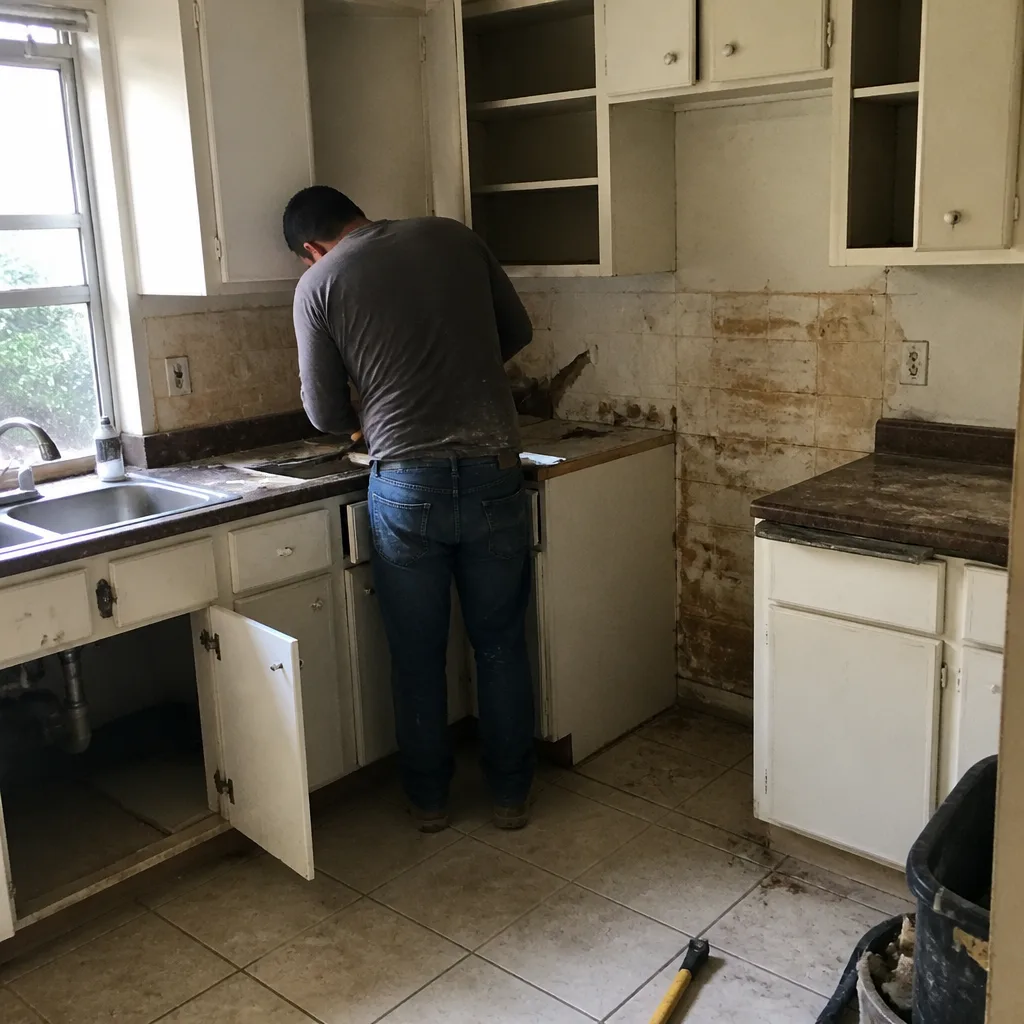 Before
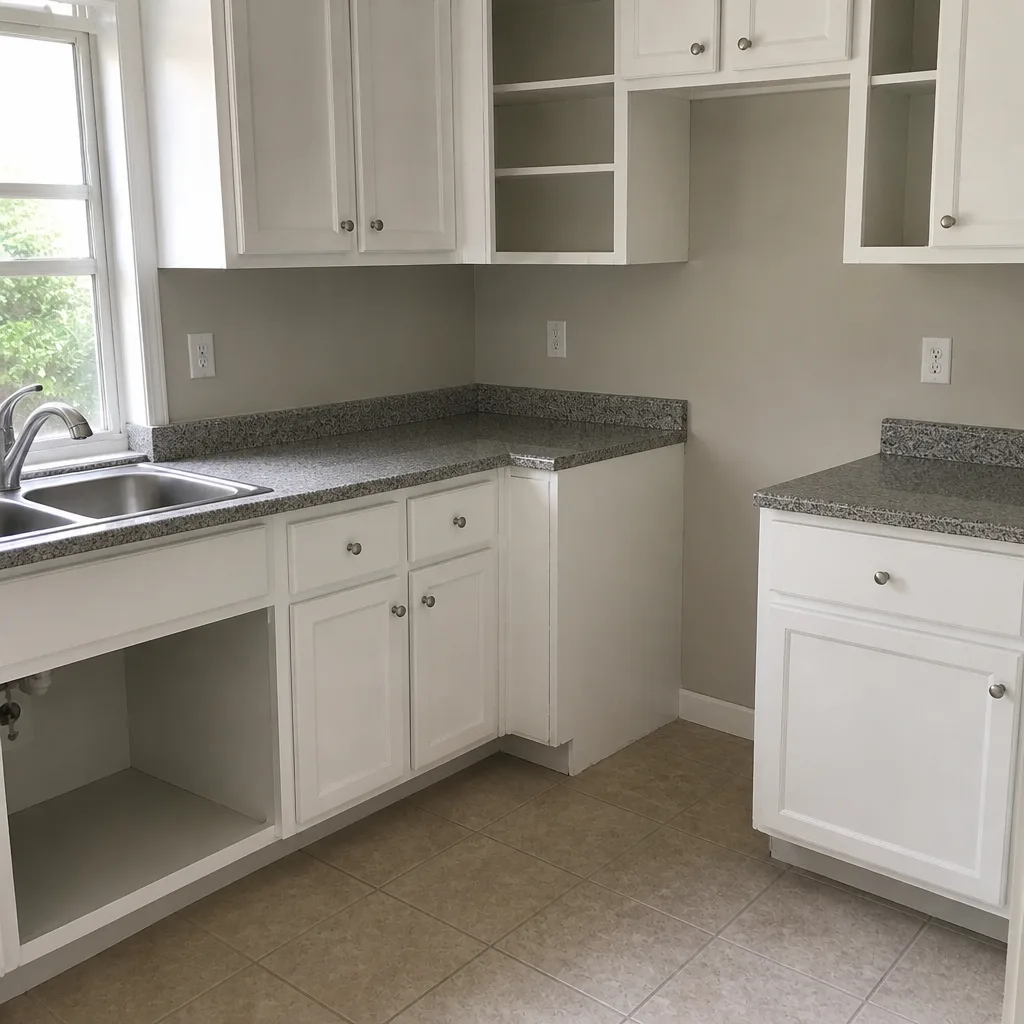 After
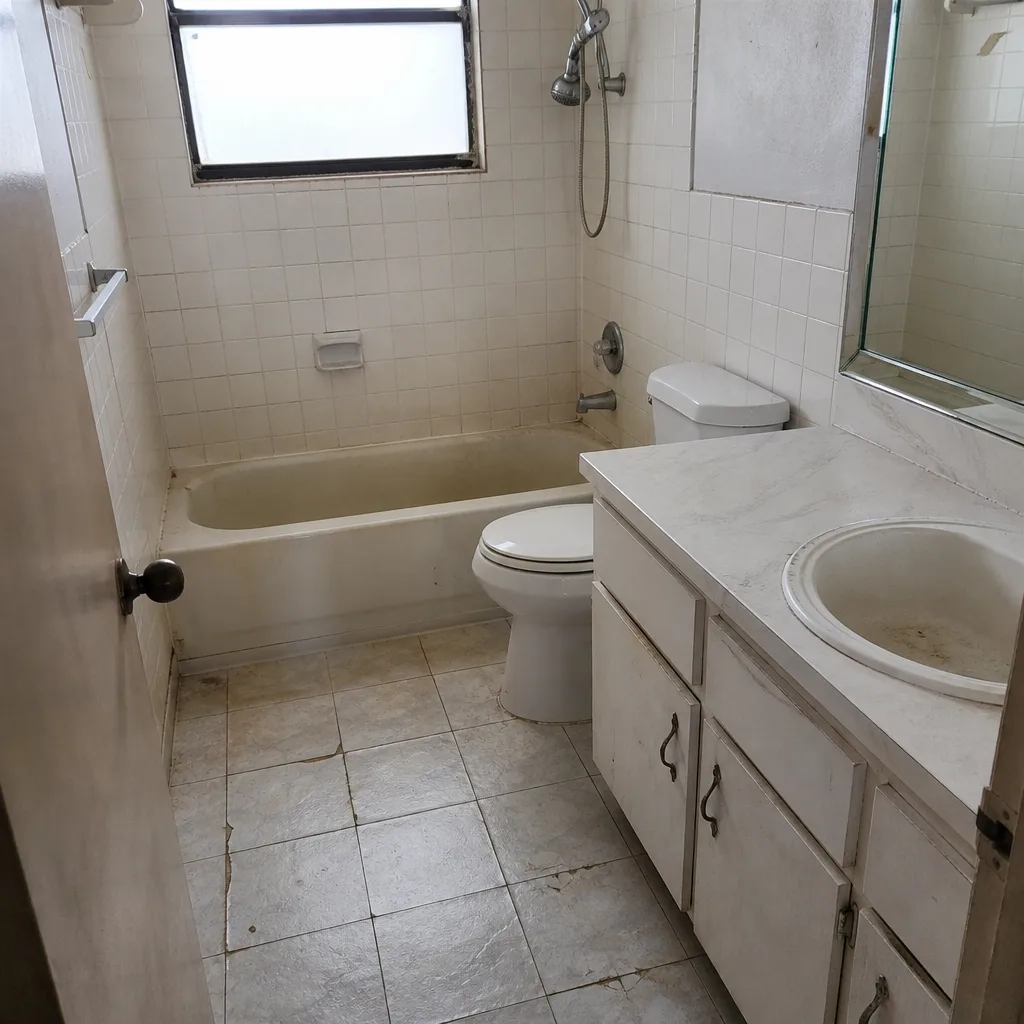 Before
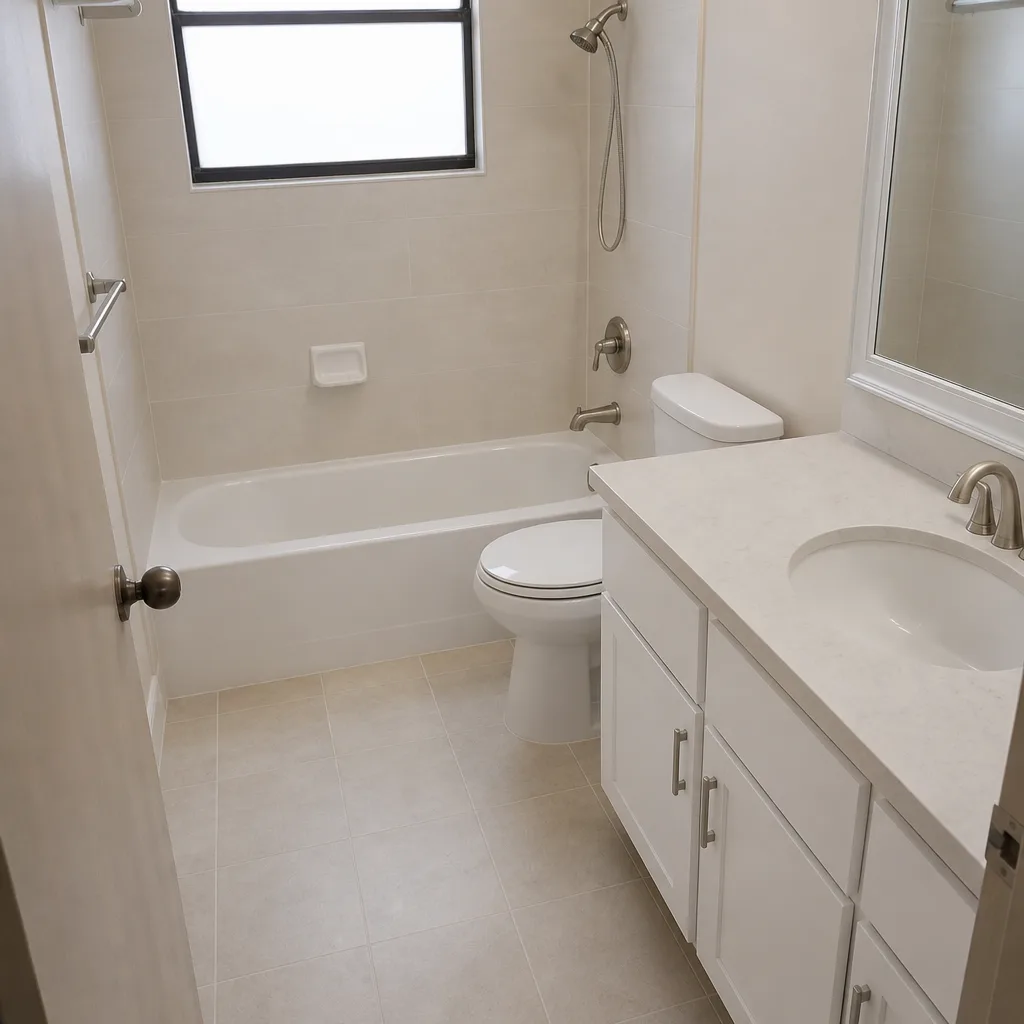 After
Frequently Asked Questions
No, plumbing rough-in work that moves, adds, or replaces a drain, supply line, or fixture rough-in requires a licensed plumber and a Miami-Dade County permit. You can safely swap a faucet cartridge, replace a toilet supply line, or change a showerhead yourself. Anything opening the wall needs a license. Call (833) 734-5128 for a free estimate on the plumbing scope only if you want to leave the rest to yourself.
Unpermitted work can block a home sale, void insurance coverage on the affected area, and require retroactive permitting that often involves opening walls back up. You may also be required to remove the work if it can’t be brought into compliance. The cost of the permit is almost always less than the cost of unwinding it. Call (833) 734-5128 for a free second opinion on your written estimate before you sign.
Yes, tile is not a licensed trade in Florida, and setting tile yourself is legal. The risk isn’t the tile; it’s the waterproofing behind it. In Doral’s humid climate, a shower needs proper cement board and a waterproofing membrane, not drywall with a coat of paint-on sealer. If you’re not confident in the waterproofing step, hire that part out and tile over it yourself. Call (833) 734-5128 if you want to price the waterproofing separately.
Sometimes, yes. If a licensed contractor finishes a phase and you later modify the same area yourself, the warranty on that phase usually pauses until the boundary is clarified. The simplest solution is to write the DIY scope into the contract before work starts. Our 90-Day Done Right Promise covers our work and only our work, and we put that in writing. Call (833) 734-5128 to review scope before you sign.
Finish work is the safe zone: paint, trim, cabinet hardware, mirrors on standard anchors, light fixture swaps in an existing box, regrouting, and swapping a vanity top on the existing connections. These carry low risk and real savings. Everything that moves water, power, or structure belongs to a licensed trade. Call (833) 734-5128 if you want a free second opinion on which is which in your specific house.
For finish work, a homeowner typically saves several hundred dollars per line item with low callback risk. For plumbing, electrical, or structural trades, the savings usually don’t survive the first callback or the first permit question. If the work touches a wall, a drain, or a circuit, we recommend a licensed contractor. Call (833) 734-5128 for a free estimate with a written scope so you can see the savings honestly.
If your project extends beyond the bathroom to the roof line, our guide on Fence Installation in Doral follows the same honest trade-by-trade line, and our Doral home base page is here: Barrett & Sons Construction Doral home. We’re also happy to walk you through a wider look at your whole home’s exterior and interior sequencing on our site.
The Bottom Line
Finish work is yours. Paint, trim, hardware, mirrors, and swaps on existing connections are the parts where DIY actually pays. Rough-in is not. Plumbing, electrical, and structural work in Doral needs a licensed trade and a Miami-Dade permit, and the cost of unwinding an unpermitted bathroom at sale time is far larger than the labor you saved doing it yourself. Tile and drywall sit in the middle, safe with patience and knowledge of what’s behind the wall. Draw the line before work starts, put it in writing, and the remodel stays a project instead of a problem. Barrett & Sons Construction Doral pulls permits on every eligible job, keeps price changes in writing, and backs it all with a 90-Day Done Right Promise. Call us for a free estimate before you pick up the first tool.
Call (833) 734-5128 to schedule a free estimate with Barrett & Sons Construction Doral. A live person answers the phone 24 hours a day, 7 days a week.
Written by the team at Barrett & Sons Construction Doral.