Last updated November 17, 2026
Free written scope consultation - allowances, timeline, and change-order rules on paper before a single trade is scheduled
Driveway & Pavers Maintenance Checklist for Doral Homeowners
A paver driveway in Doral that looks perfect in January can show serious base failure by August. Not because the pavers failed. Because six months of daily 2-inch rainstorms pushed the polymeric sand out of the joints before anyone noticed, and once the sand is gone, water goes straight into the bedding layer and starts moving the base. We’ve pulled up Doral driveways that were only four years old and found the problem started in the first wet season. This checklist is built for that fight – UV oxidation, tropical downpours, and the root systems of the royal palms your HOA requires. You’ll learn the inspection schedule that actually fits Doral, the two failure patterns to catch early, and the mistake almost every homeowner makes with a pressure washer.
Quick Answer
Doral paver driveways need a five-minute walk-around every month, joint sand topped off before each wet season, and re-sealing roughly every 18 to 24 months – not the 3 to 5 years you’ll read in guides written for cooler climates. Pressure washing should happen no more than once a year at low pressure, because South Florida sun plus an aggressive wash strips sealant in a single afternoon.
Styles & brands we work with
- Kitchen remodeling
- Bathroom remodeling
- Home additions & ADU
- Roofing
- Windows & doors
- Driveway & pavers
- Fence
Table of Contents
- Why Doral Driveways Fail Differently Than Anywhere Else
- The Five-Minute Monthly Walk-Around
- Re-Sanding: The Doral Wet Season Schedule
- Re-Sealing on a South Florida Clock
- Edge Creep and Center Sag: The Two Failure Patterns
- Palm Root Intrusion Under Paved Surfaces
- Pressure Washing Without Wrecking the Finish
- Your Doral Maintenance Calendar
Why Doral Driveways Fail Differently Than Anywhere Else
Most driveway maintenance advice online was written for Ohio, Pennsylvania, or Ontario, where the enemy is the freeze-thaw cycle. Water gets into a joint, freezes, expands, and pops the paver loose. Doral doesn’t have that problem. What Doral has is 60-plus inches of rain a year, most of it in a hard afternoon burst between May and October, and a sun that bakes the surface at 130°F or more on a July afternoon.
Those two forces work together. The sun oxidizes the sealant and dries out the joint sand until it turns brittle. Then a tropical downpour hits, the water sheets across the surface because there’s nowhere to drain, and it finds every joint where the sand has degraded. Once water is under the pavers, the bedding sand starts to migrate. The base – usually limerock or crushed aggregate here in Doral – can stay sound while the layer right above it washes out, which is why a driveway can look flat and solid until suddenly it isn’t.
Here’s what that means in practice:
- Joint sand degrades faster here. Figure on checking it twice a year, not once every two years.
- Sealant life is shorter. UV exposure at this latitude breaks down acrylic sealers in 18 to 24 months. Up north you might get 4 to 5.
- Drainage matters more than material. A beautiful Belgard or Techo-Bloc driveway pitched the wrong way will fail faster than a cheaper paver pitched correctly.
- Biological growth is constant. Algae and mold grow in shaded joints year-round, especially on the north side of a house.
If you’re weighing a new install versus repair, our Driveway & Pavers in Doral page covers materials and costs in detail. This guide is about keeping what you already have.
The Five-Minute Monthly Walk-Around
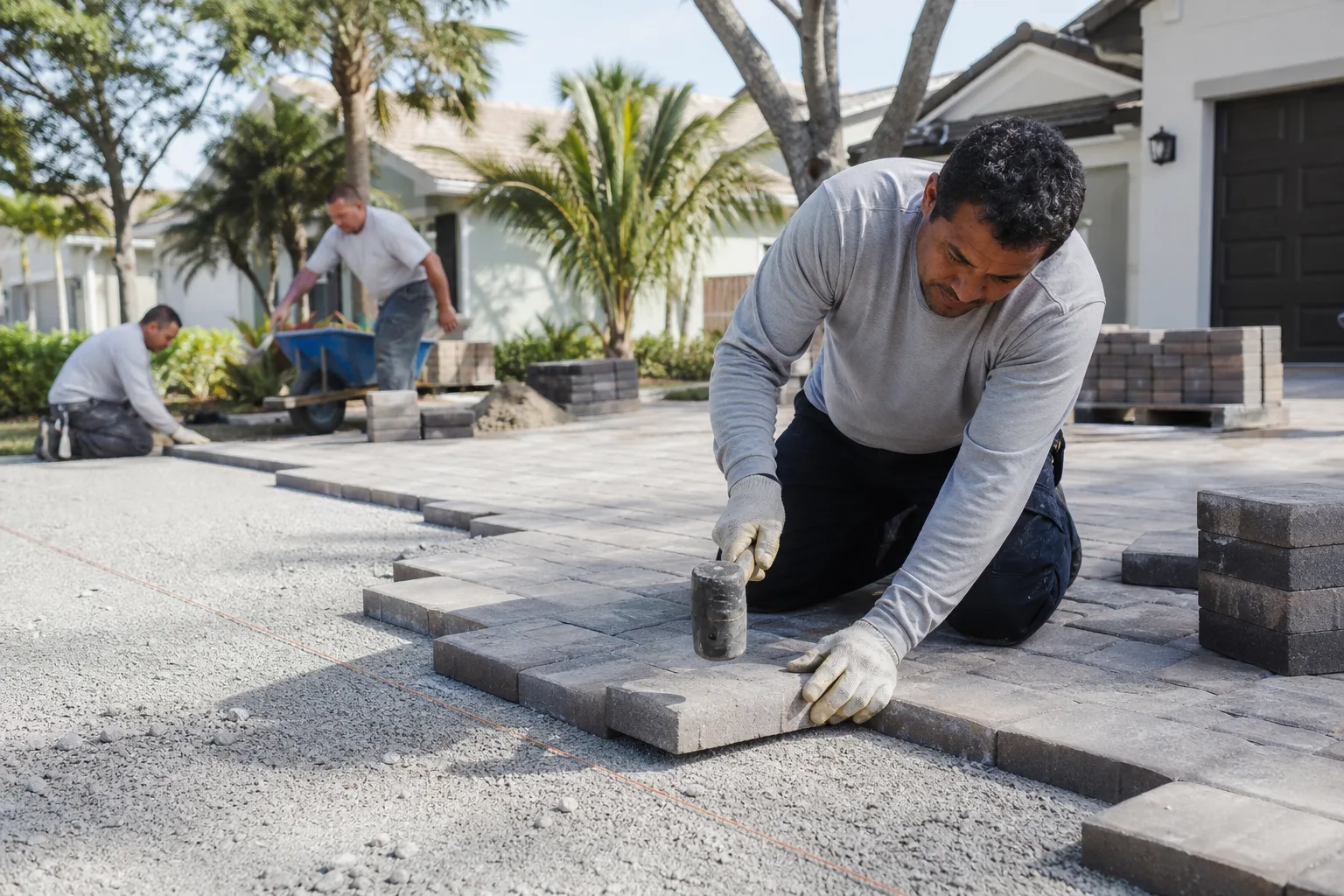
This is the single highest-value habit in this entire checklist. Five minutes, once a month, walking your driveway with your eyes open catches almost every problem while it’s still a $200 fix instead of a $4,000 re-install. Do it on a dry morning, not after rain, so you can see the surface clearly.
Run these steps in order:
- Walk the perimeter. Look at the edge restraint – the border that holds the field pavers in place. Any paver sitting more than a quarter inch proud of its neighbor is edge creep starting.
- Look down the length at a low angle. Stand at the garage and sight along the driveway toward the street. You should see a consistent plane. A dip in the middle means center sag.
- Check the joints. On your hands and knees at a few spots. If you can poke a screwdriver into a joint more than half an inch before hitting resistance, sand is low.
- Look for efflorescence. That’s the white chalky haze on the paver face. It means moisture is moving through the material and evaporating. Minor haze is normal in Doral. Heavy, recurring haze points to a water source underneath.
- Scan the edges for weeds. Doral has weeds that push up through a 1/8-inch joint. Persistent weeds in one area mean sand is gone there.
- Look for settling at the apron. The strip where the driveway meets the street takes the hardest water load. Small settlement here is normal; a step-down means the base is washing out.
Write the date on a sticky note and stick it in the garage. If you note a problem twice in a row, that’s your signal to call someone.
Re-Sanding: The Doral Wet Season Schedule
Generic advice says re-sand every two to three years. That schedule was written somewhere with a normal rain pattern. In Doral, the wet season runs roughly May through October, and a driveway can take 2 inches of rain in a single afternoon, several times a month. That’s a lot of water pushing sand out of joints.
The right schedule for Doral is to inspect joints in April, before the wet season starts, and top off any low joints then. Then inspect again in November, after the season ends, and top off whatever the summer washed out. If your driveway gets heavy runoff from a neighbor’s grade, or the pitch runs toward a swale, add a mid-season check in July.
What to use:
- Polymeric sand, not regular sand. Polymeric sand activates when wet and locks into a semi-solid joint. In Doral’s humidity, that lock is the difference between a driveway that holds and one that washes out.
- Match the brand of the joint sand to the paver if the manufacturer specifies one. Techo-Bloc and Belgard both publish recommended joint sands for their product lines.
- Fill to within 1/8 inch of the paver face. Overfilling leaves loose sand on the surface that washes into the storm drain and hauls out of the joints.
- Never sand right before a forecasted rain event. The activated polymer needs to cure. In Doral, that means checking the radar.
Re-sanding a driveway in Doral typically runs $350 to $700 for a standard two-car drive, depending on square footage and whether joints need cleaning first. If you’ve never done it, it’s a job worth watching once before you try it yourself.
Re-Sealing on a South Florida Clock
Here’s where Doral diverges hardest from the generic advice. Guides written for the Midwest say seal every three to five years. In Doral, plan on 18 to 24 months, and inspect at 18 months to decide. Our latitude sits close enough to the tropics that UV exposure is intense year-round, not just in summer. A two-year-old acrylic sealer in Doral looks like a five-year-old sealer in Georgia.
What sealant does for you:
- Slows UV oxidation of the paver color, especially on red and tan blends that fade noticeably in Doral sun
- Locks joint sand in place against rain impact
- Makes the surface resist oil stains from the car
- Slightly darkens the color, which some homeowners like and some don’t – ask to see a test patch
What it does not do: it will not fix a base problem, it will not stop edge creep once it’s started, and it will not hold pavers together if the joints are already washed out. Sealant is a coat of armor, not a structural repair.
Two application mistakes to avoid:
- Sealing over wet joint sand. The solvent gets trapped and the seal milks out white. In Doral’s humidity, joint sand can hold moisture for days. Test before you coat.
- Sealing in direct sun above 90°F. The sealer flashes off before it penetrates. Morning application is safer here than midday.
Expect to pay $500 to $1,100 to have a Doral driveway professionally sealed with a quality acrylic. If you’re comparing bids, ask exactly what brand and what solids percentage – a cheap sealer at 20% solids won’t last 18 months under Doral sun.
Edge Creep and Center Sag: The Two Failure Patterns
We’ve been on hundreds of Doral driveways, and problems almost always start in one of two patterns. Knowing which one you’re looking at tells you how urgent it is.
Edge Creep
Pavers along the driveway perimeter start to walk outward, toward the street or the lawn. The edge restraint – usually a plastic or aluminum L-channel pinned into the base – has loosened or pulled out. Once the restraint is gone, nothing holds the outer course, and the whole field starts to spread. Early edge creep shows as pavers sitting a quarter inch proud of their neighbors, usually at the street apron or along a grass edge. Catch it in the first six months and it’s a re-pin and re-sand job. Let it run two seasons and you’re pulling up the outer two courses and re-setting the base.
Center Sag
The middle of the driveway dips, and water pools there instead of running to the street. That pooling water is the problem – it soaks into the joints, finds the bedding sand, and starts to carry it away. Center sag usually traces to one of three causes: the original base wasn’t compacted deep enough, a palm root has lifted the base from below, or a heavy vehicle (a contractor’s dumpster, a delivery truck) loaded the surface beyond its design.
Doral code and most HOA architectural rules require a specific pitch toward the swale or street. If water is pooling instead of sheet-flowing, the pitch has been lost, and pitch doesn’t come back on its own. A shallow sag can sometimes be corrected by pulling and re-setting the affected area. Deep sag means the base underneath has to be re-built.
Call us when you see standing water after a rain, or a visible dip you can feel underfoot. Standing water on a paver driveway is a base problem, not a surface problem.
Palm Root Intrusion Under Paved Surfaces
Doral HOAs love palms, and for good reason – they’re native-adjacent, hurricane-tolerant, and they look right in a South Florida neighborhood. What HOAs don’t tell you is that royal palms, cabbage palms, and the queen palms that show up in Doral landscaping all run shallow, aggressive root systems. Under a paved driveway, they become a slow mechanical problem.
How far do palm roots travel? A mature royal palm’s root system commonly reaches 15 to 25 feet from the trunk in loose soil, and the roots tend to run shallow, in the top 12 to 18 inches. That’s exactly the depth where your driveway’s base course sits. Cabbage palms are even more aggressive – their roots spread wider and can lift pavers within a few years of maturity if the palm is planted within 10 to 12 feet of the drive edge.
What to do:
- Know your setbacks. If your HOA requires a palm within 8 feet of the driveway, that palm is going to be a maintenance item for the life of the driveway.
- Watch for a lift pattern. Palm root intrusion shows as a localized bulge or ridge running from the tree outward, not the uniform sag of a base failure.
- Don’t cut major roots to “fix” it. Cutting structural roots on a mature palm can destabilize the tree in a windstorm, which is a real problem in Doral.
- Root barriers can be installed at the edge if the palm is close but not yet causing lift. Once roots are under the pavers, the fix is usually a localized pull, base re-cut, and re-set.
If you’re planning landscaping and pavement together, our Fence Installation in Doral guide covers how we think about setbacks and root zones across the whole property – it’s the same logic that applies to palms near a driveway.
Pressure Washing Without Wrecking the Finish
Here’s the mistake that costs Doral homeowners the most money for zero reason. A pressure-washing routine that’s perfectly fine in Atlanta – 3,000 PSI, weekly or bi-weekly in summer – will strip a fresh sealant off a Doral driveway in two washes. Our sun has already thinned the sealer. A high-pressure wash finishes it off.
Rules for Doral:
- Once a year, at low pressure. 1,200 to 1,500 PSI maximum, with a fan tip, not a turbo nozzle. Turbo tips gouge paver faces.
- Never aim straight down at a joint. Angle the wand at 30 to 45 degrees. Straight down blows sand out, and in Doral that means you’re re-sanding two weeks later.
- Skip the bleach-heavy cleaners. They eat sealant and damage the paver surface over time. A pH-neutral paver cleaner handles Doral’s typical mildew load.
- Wash before re-sealing, not after. Sealant needs a clean, dry surface. Washing after sealing shortens the sealant’s life.
- Re-check joint sand after every wash. The high-pressure wand will strip some sand even done right. Top it off.
If you want to skip the risk entirely, have the driveway washed and re-sealed in the same visit. Most Doral companies bundle that for $700 to $1,400, which is roughly what you’d spend on the sealer alone as a homeowner plus a Saturday.
Your Doral Maintenance Calendar
Here’s the schedule compressed into one place. Print this out or put it in the notes app on your phone.
- April: Full walk-around, top off joint sand, check edge restraint, spot-clean mildew before the wet season.
- May through October (wet season): Monthly five-minute walk-around. Pay extra attention to the street apron and any low spots. Note any pooling water.
- July: Mid-season sand check if you’ve got heavy runoff or a palm close to the drive.
- November: Full walk-around, top off sand washed out during the wet season, assess sealant condition by testing a small patch with water (if it beads, sealant is holding; if it soaks in, it’s time).
- December through February: Best window to seal – lower humidity, less direct sun, no daily rain. If your sealant is at 18 months, this is the window.
- March: Light pressure wash at low PSI if needed, then let it dry before April’s sand top-off.
If you’re also thinking about expanding the garage, adding a car pad, or building out an ADU that needs driveway work as part of the project, our Home Additions & ADU in Doral guide covers what the permit process looks like and where pavement fits into it. Concrete pad under an ADU is a different formula than paver work for the main drive.
Common Mistakes to Avoid
- Using a turbo nozzle. They look like they work faster. In Doral, a turbo tip takes the top layer of the paver off along with the dirt, and you can’t put it back.
- Re-sanding with regular sand instead of polymeric. In Doral’s rain pattern, regular sand washes out within one wet season. That’s a waste of a Saturday.
- Sealing in July. The sealer flashes off before it penetrates, and you end up with a hazy film that peels within a year. December through February is the smart window here.
- Ignoring small edge creep for “one more season.” The outer course walks one more inch each wet season. A $200 re-pin becomes a $1,800 re-lay quickly.
- Bleach-bombing algae and mold. A strong bleach mix eats sealer and shortens the life of the pavers. Use a paver-specific cleaner.
- Cutting palm roots on your own. A destabilized royal palm in a Doral windstorm is a much bigger problem than a bulged paver. Call a pro before you touch a structural root.
- Calling it a “base failure” before diagnosis. A lot of what looks like base failure is a palm root or a runaway outer course. Get a second opinion before you spend on a full re-install.
See the difference
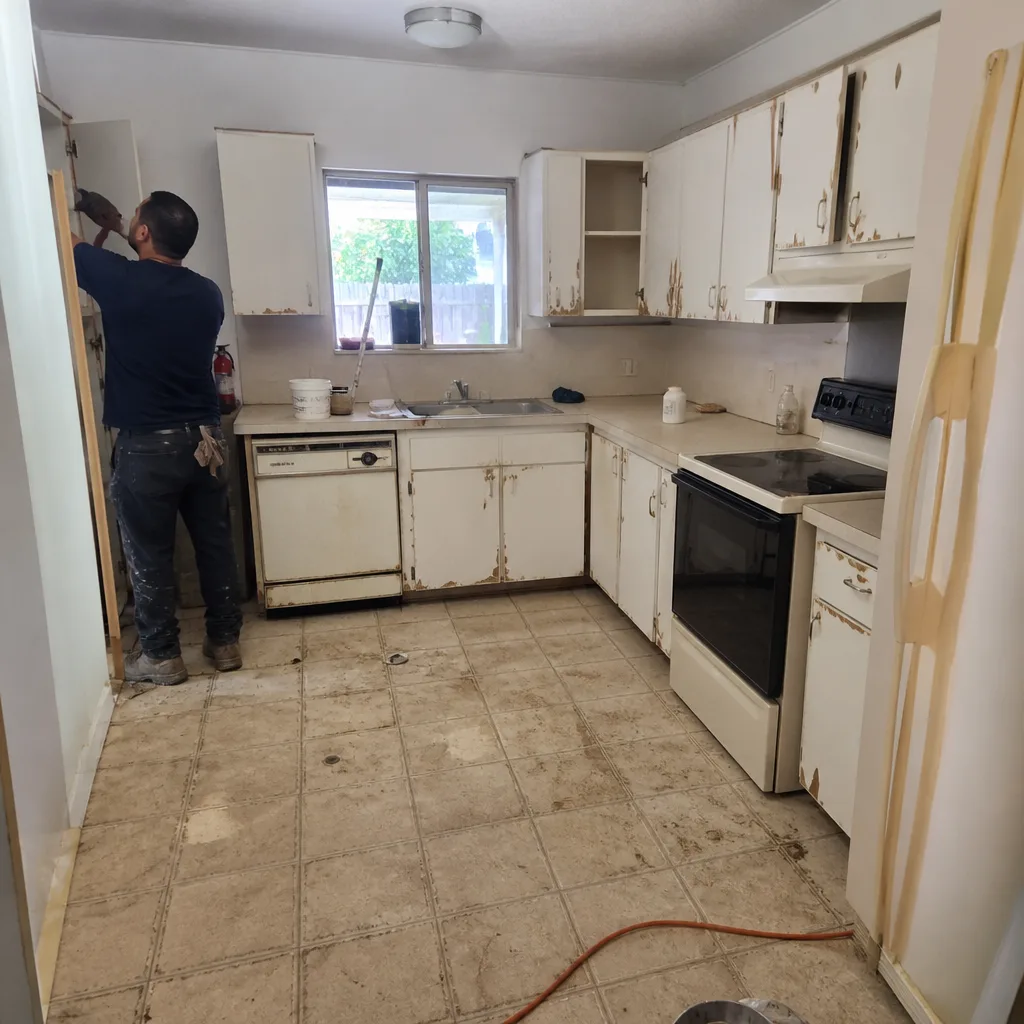 Before
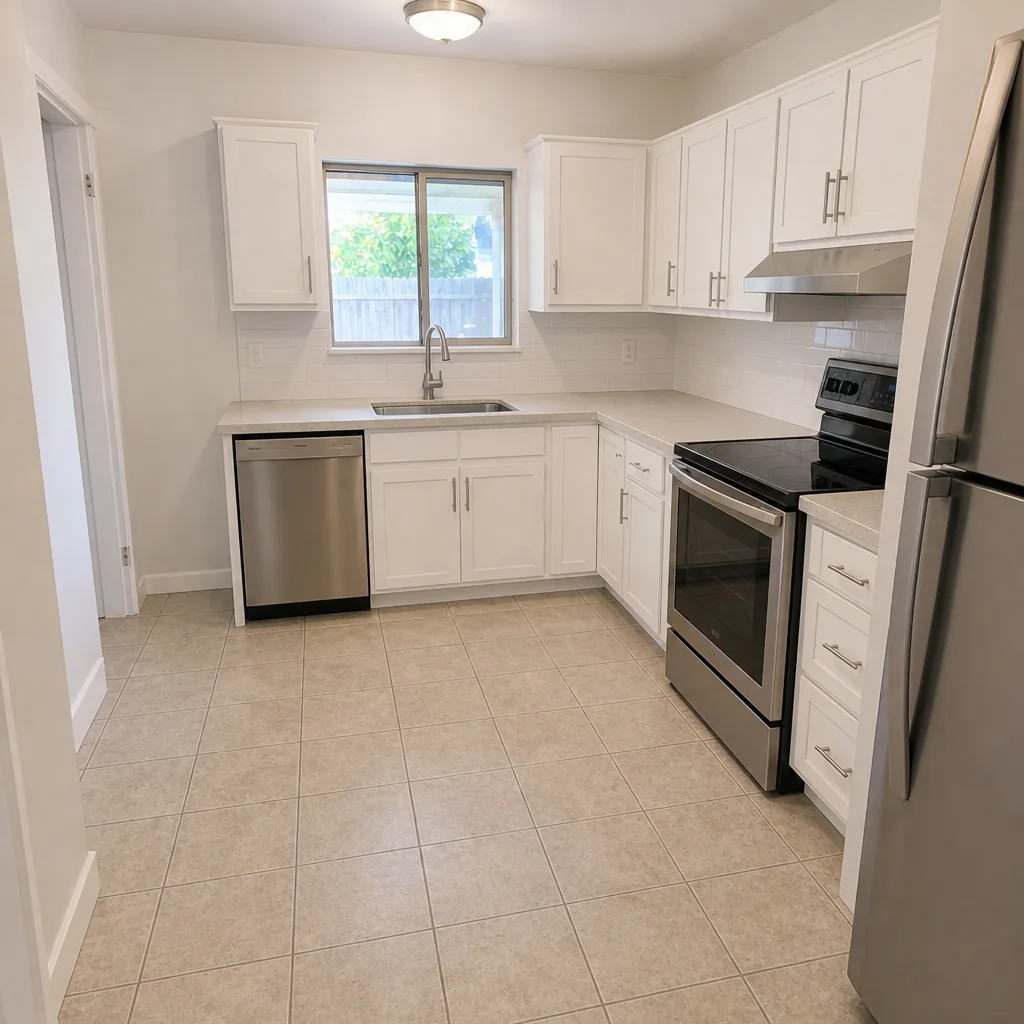 After
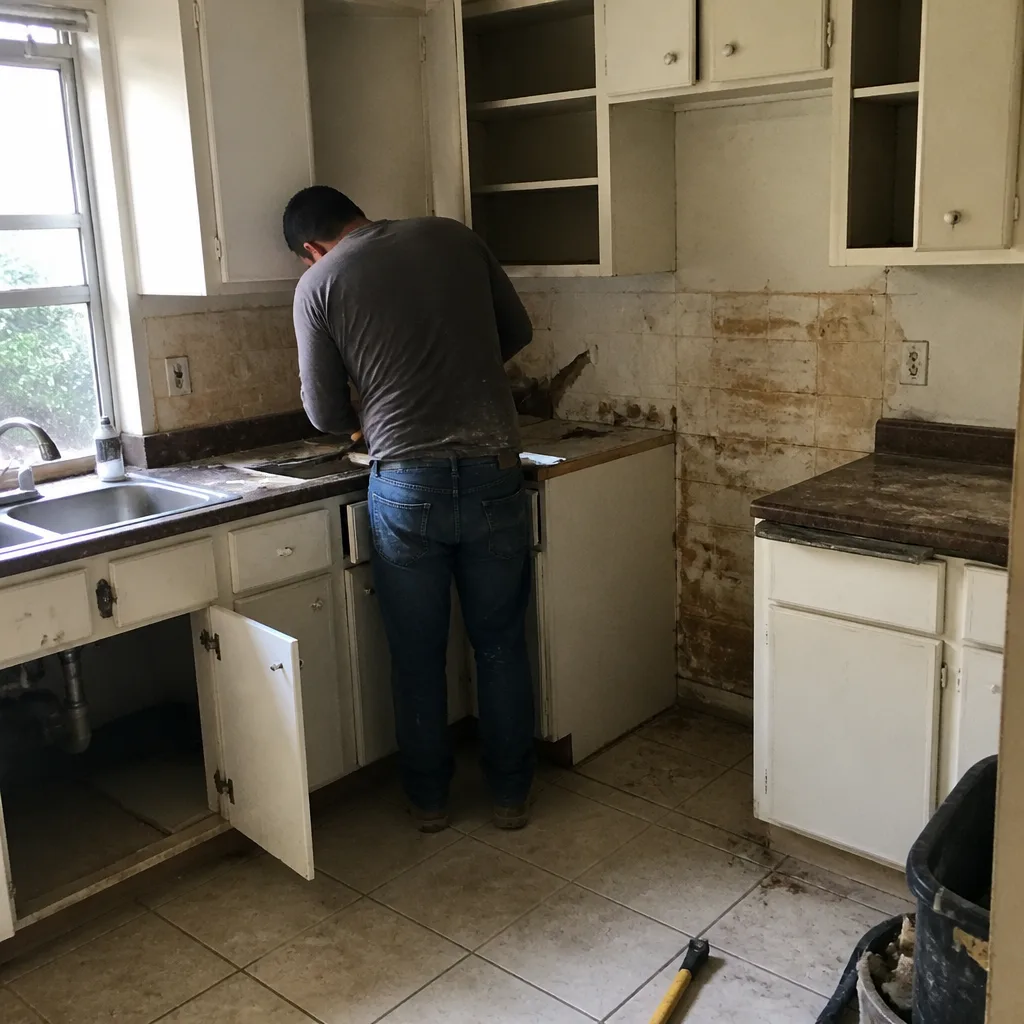 Before
 After
 Before
 After
When to Call a Professional
Some of this checklist is yours to handle. The rest should go to a licensed contractor with a proper base-compaction setup and a truck that carries the material. Call a pro when you see any of these:
- Standing water on the driveway after a rain, more than a few hours after the storm passes
- Edge pavers creeping more than a quarter inch out of line
- A visible dip you can feel underfoot, or pavers that rock when stepped on
- Palm roots visibly lifting pavers, or a bulged section running outward from a tree
- Any sign that sealant has failed and the joint sand is washing out faster than you can re-top it
- Efflorescence that keeps coming back after a wash – that points to water under the pavers, not on top
- You’re considering a full replacement and want a straight answer about whether it’s necessary
Barrett & Sons Construction Doral offers free estimates in Doral – call (833) 734-5128. We’ll walk the driveway with you, tell you honestly what’s a maintenance item and what’s a real repair, and put the scope in writing before anything gets quoted.
Frequently Asked Questions
Every 18 to 24 months, roughly twice as often as the 3-to-5-year schedule you’ll find in most online guides. Doral’s UV exposure breaks down acrylic sealers much faster than northern climates break them down. Test a small patch with water in November – if it beads, hold off a season; if it soaks in, book the job for the December-February window. Call (833) 734-5128 for an exact quote on sealing – estimates are free.
Yes, but at low pressure (under 1,500 PSI) with a fan tip angled 30 to 45 degrees, no more than once a year. A turbo nozzle or a wand straight down will strip joint sand and gouge paver faces. If you’re unsure what your machine is putting out, have it done professionally once so you can see what a proper low-pressure wash looks like. Call (833) 734-5128 to price a wash-and-seal visit.
Pooling water almost always means the base course has settled or a palm root has lifted the pavers from below, and the pitch that was designed into the driveway is no longer there. It is not a surface problem and no amount of sealer will fix it. Get it looked at before the next wet season – a shallow sag is a repair, a deep sag is a re-install. Call (833) 734-5128 for a free walk-through and we’ll tell you which one you’re looking at.
A mature royal palm’s root system commonly reaches 15 to 25 feet from the trunk and runs shallow, in the top 12 to 18 inches – the same zone as your base course. Cabbage palms spread wider and can lift pavers within a few years of maturity if planted within 10 to 12 feet of the drive edge. If your HOA requires a palm close to the driveway, plan for root management as a permanent maintenance line item.
Not without your signature. Every change order on a Barrett & Sons job is written and issued before the scope changes, including material allowances. An allowance that isn’t on paper is a surprise waiting for a date, and we don’t work that way. Call (833) 734-5128 for a free written estimate with line-item pricing.
Replacing a driveway that touches the right-of-way or changes the drainage pattern usually requires a permit through the city, and many Doral HOA architectural review boards require a separate approval for paver color or material changes. Repairs to the field pavers usually don’t. Before any replacement work starts, get the answer in writing – we pull permits on every eligible job and get inspections signed. Call (833) 734-5128 and we’ll walk you through what your specific project triggers.
The Bottom Line
Doral is a bad climate for the maintenance schedule you’ll find on most driveway guides, and a good climate for a driveway that’s pitched right, sanded with polymeric, and sealed on a two-year cycle. The five-minute monthly walk-around is the single best investment of your time – it catches edge creep and center sag while they’re still small. Re-sand before the wet season and after, seal in the dry window, and never let a turbo nozzle touch the pavers. If you see pooling water, palm-root lift, or a creeping edge you’ve been meaning to “get to,” that’s the moment to call. We’ve watched a lot of Doral driveways go from a Saturday fix to a full replacement because nobody looked for one more season. Take the walk. Then call if something’s off.
Everything covered here – the paving, the fencing, the ADU work, the whole property – is under one roof at Barrett & Sons Construction Doral, backed by our written 90-Day Done Right Promise and our published name, address, and license number. Look us up before you sign anything, from anyone. For a free estimate on driveway pavers maintenance, re-sanding, sealing, or a full replacement, call us at (833) 734-5128. A live person answers, day or night. Start with the Barrett & Sons Construction Doral home page if you’d like to see what else we handle, and we’ll meet you on the driveway.
Written by the team at Barrett & Sons Construction Doral.