Last updated November 17, 2026





Free written scope consultation - allowances, timeline, and change-order rules on paper before a single trade is scheduled
Seasonal Construction Care for Doral: Year-Round Homeowner’s Guide
Doral averages 62 inches of rain a year, and almost all of it lands between May and October. That single number reorders the entire maintenance calendar. A homeowner who notices a flashing problem in October and waits until December to call has already let two months of daily rain work moisture deeper into the wall assembly than a dry-season repair would have faced. Doral doesn’t get four seasons. It gets two: a dry window when exterior work is fast and predictable, and a wet season that finds every gap the last contractor left behind. This guide maps the year to that real rhythm – what to inspect in March and April, what to schedule before the storms, what to check after them, and what the HOA in a Doral master-planned community needs to approve before you touch a fence or a roofline.
Quick Answer
In Doral, seasonal construction care runs on a two-season calendar, not four. The critical inspection window is March through April, before the first heavy rains: check roof flashing, window perimeters, stucco expansion joints, and drainage channels while everything is still dry and repair work is fast. Schedule pavers, stucco, and exterior paint in the dry season (roughly November through April), and treat May through October as the season for interior work, moisture monitoring, and post-storm assessment.
Styles & brands we work with
- Kitchen remodeling
- Bathroom remodeling
- Home additions & ADU
- Roofing
- Windows & doors
- Driveway & pavers
- Fence
Table of Contents
- Why Doral’s Two-Season Climate Changes the Maintenance Calendar
- The March-April Pre-Wet-Season Inspection Checklist
- What to Schedule in the Dry Season (And Why August Creates Problems)
- Post-Hurricane-Season Assessment: Material-Specific Inspection Points
- UV, Moisture, and Biological Growth: What Replaces the Freeze-Thaw Cycle
- The Doral HOA Notification Calendar
- The Wet Season Is Interior Season
- Common Mistakes to Avoid
- When to Call a Professional
Why Doral’s Two-Season Climate Changes the Maintenance Calendar
Most seasonal maintenance guides are written for climates with a freeze-thaw cycle, where winter freezing and spring thawing drive the annual damage pattern. Doral doesn’t have that problem. Our temperature stays consistent enough that thermal expansion and contraction is a minor factor compared to what actually wears a Doral home: UV radiation, sustained moisture, and biological growth.
That shift matters because it changes what you inspect and when. A homeowner in a cold climate worries about ice dams and frost heave. A homeowner in Doral worries about a north-facing stucco wall that never fully dries, a window sill where caulk has failed and rain has been wicking in for months, and a roof deck where algae has been feeding on moisture retention.
Doral’s development pattern adds another layer. Neighborhoods like Downtown Doral, Doral Isles, and the communities along NW 87th Avenue sit close enough to the Everglades that humidity stays high well into the dry season. Morning dew and overnight condensation can keep south and east elevations damp long after the rainy season ends. In our experience, that extended damp period is why a November repair often finds more moisture intrusion than the homeowner expected from a “dry season” call.
Here’s the practical takeaway: in Doral, your maintenance year splits into a five-to-six-month wet season (May through October) and a dry season (roughly November through April). The first two months of the dry season, November and December, are for assessment and planning. The middle of the dry season, roughly January through April, is for exterior work. And March and April specifically are for pre-wet-season inspection, because those are the last reliable dry weeks before the rain returns.
The March-April Pre-Wet-Season Inspection Checklist
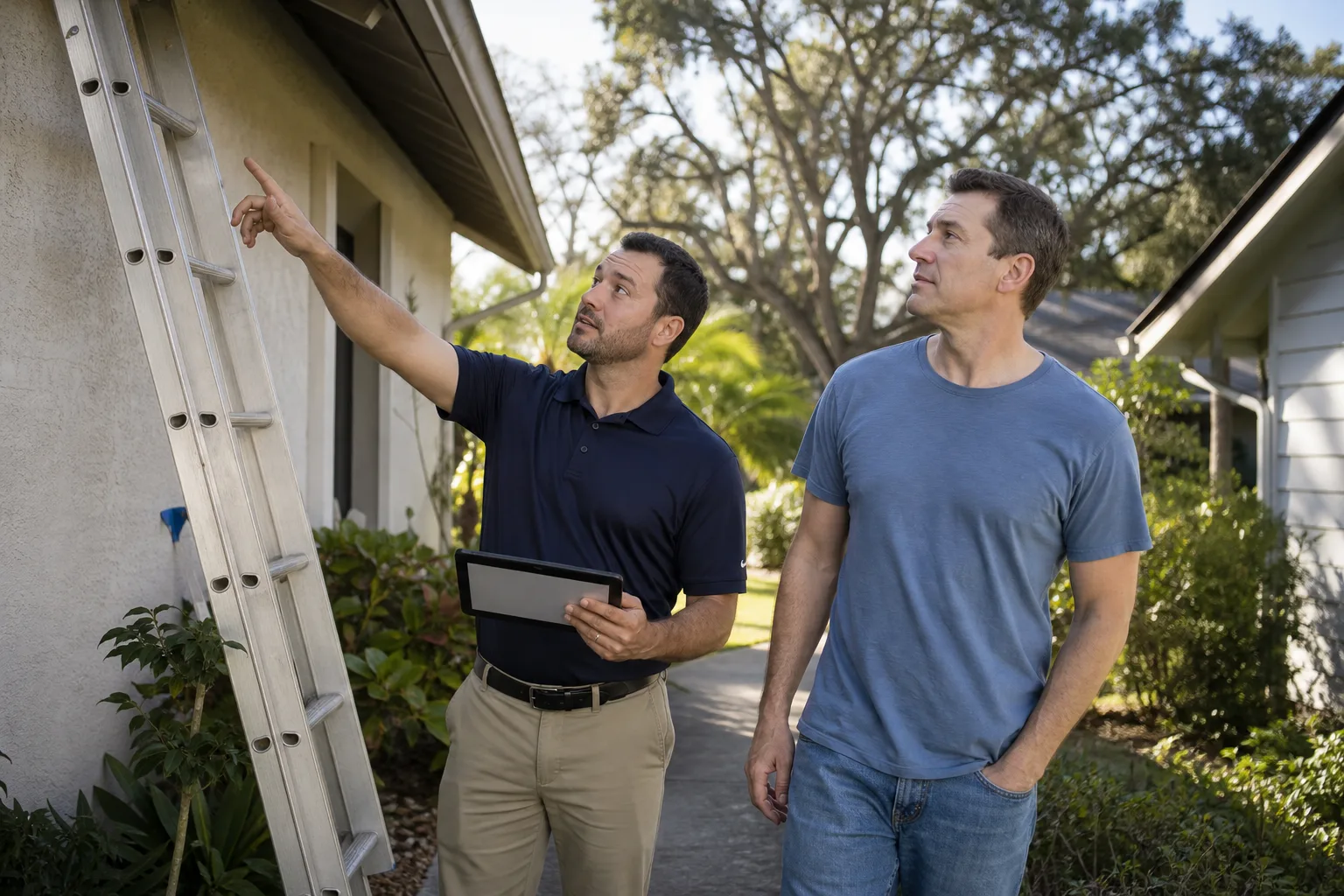
March and April are the most valuable weeks on Doral’s maintenance calendar. The rains haven’t started, the ground is dry enough to walk a roof safely, and a repair done now has weeks to cure before it’s tested. This is the checklist we walk through with Doral homeowners before the first storm.
- Roof flashing and penetrations. Look at the flashing around chimneys, vents, and roof-to-wall transitions. In Doral, the failures we see most often are at pipe boots and at the seam where a flat roof section meets a pitched section. If a GAF or CertainTeed shingle course is lifting at an edge, that’s a wind-lift risk going into hurricane season, not just a water risk.
- Window and door perimeters. Old caulk fails before the window does. Run a finger along the interior sill after a hard rain and look for dampness; run your thumb along the exterior caulk joint and look for cracking or pull-away. Andersen and Marvin units in Doral homes fail at the perimeter seal far more often than at the glass.
- Stucco expansion joints and cracks. Check every expansion joint for caulk that has dried and pulled away, and note any crack wider than a credit card edge. Doral’s stucco takes a lot of sun; hairline cracks open up over a dry season and let the first rain in.
- Drainage channels and gutters. Clear gutters, downspout outlets, and any swale or drainage channel on the property. A blocked downspout during a Doral afternoon storm can push water against a wall for hours.
- Exterior paint and sealant at grade. Check where the wall meets the ground. Failed paint or sealant at grade lets moisture wick up into the wall assembly.
- Fence posts and hardscape edge restraints. Check for posts that have loosened and paver edges that have heaved. The wet season will widen any gap that’s already there.
The whole walk-through takes an hour or two. What it buys you is the difference between a repair done in April on dry materials and a repair done in September once water has already been sitting in the assembly for months.
What to Schedule in the Dry Season (And Why August Creates Problems)
The dry season is when Doral’s exterior work should happen, and that’s a scheduling rule, not a preference. Here’s the split we work with.
- November through April: exterior work. Roofs, exterior paint, stucco repair, driveway and paver work in Doral, fence installation, and window replacement. Dry weather means predictable cure times, no rain days eating into the schedule, and a finished job that can be inspected before the rains return.
- May through October: interior work. Kitchen and bath remodeling, home additions and ADU work, and anything with a roof or a wall assembly that a construction schedule will open up. The exterior stays shut, and the crew isn’t fighting rain delays.
Why not schedule exterior paver or stucco work in August, even with a good contractor? Because the wet season doesn’t allow dry cure windows. Paver base material needs to be dry and compacted before sand is swept into the joints; a base that’s been sitting wet will move, and the joints will open up within a season. Stucco applied in August gets rained on before it’s cured, and the surface can wash and develop the kind of hairline crazing that looks like normal aging but isn’t. Exterior paint needs a dry surface and a dry cure window; August in Doral doesn’t reliably offer either. None of this is about the contractor’s quality. It’s about the weather giving the material what it needs.
When planning, remember that dry-season slots fill. If you want paver work done in February, call in November or December.
Post-Hurricane-Season Assessment: Material-Specific Inspection Points
When hurricane season ends in November, the assessment isn’t a generic “check your roof.” Different materials fail in different ways in Doral, and knowing which one to look at saves time and money. Here’s how to break it down.
- Asphalt shingle roof. Walk the perimeter (from the ground with binoculars is fine). Look for seal-tab failure at the eave courses, granule loss in patches, and any shingle that’s lost its pattern or shifted out of line. Wind-lift doesn’t always tear the shingle; it can loosen the seal and leave the roof intact until the next storm lifts it. If your home has a GAF or CertainTeed roof, the shingle manufacturer’s warranty depends on installation and on keeping the roof in good repair, so document any damage.
- Flat and low-slope roof sections. Look for ponding water and blistered seams. On Doral homes with flat roof sections, seam failure is the most common post-storm problem.
- Stucco and concrete walls. Look for new cracks, especially around window and door corners, and for any stucco that has pulled away from the substrate (a “hollow spot” when tapped with a knuckle). New cracks after a storm need sealing before the dry season ends.
- Paver driveways and pool decks. Look for shifted pavers, open joints, and settled areas. Water that got under the base during a storm will shift the sand and open the joints; if you leave it, the next rain gets further under.
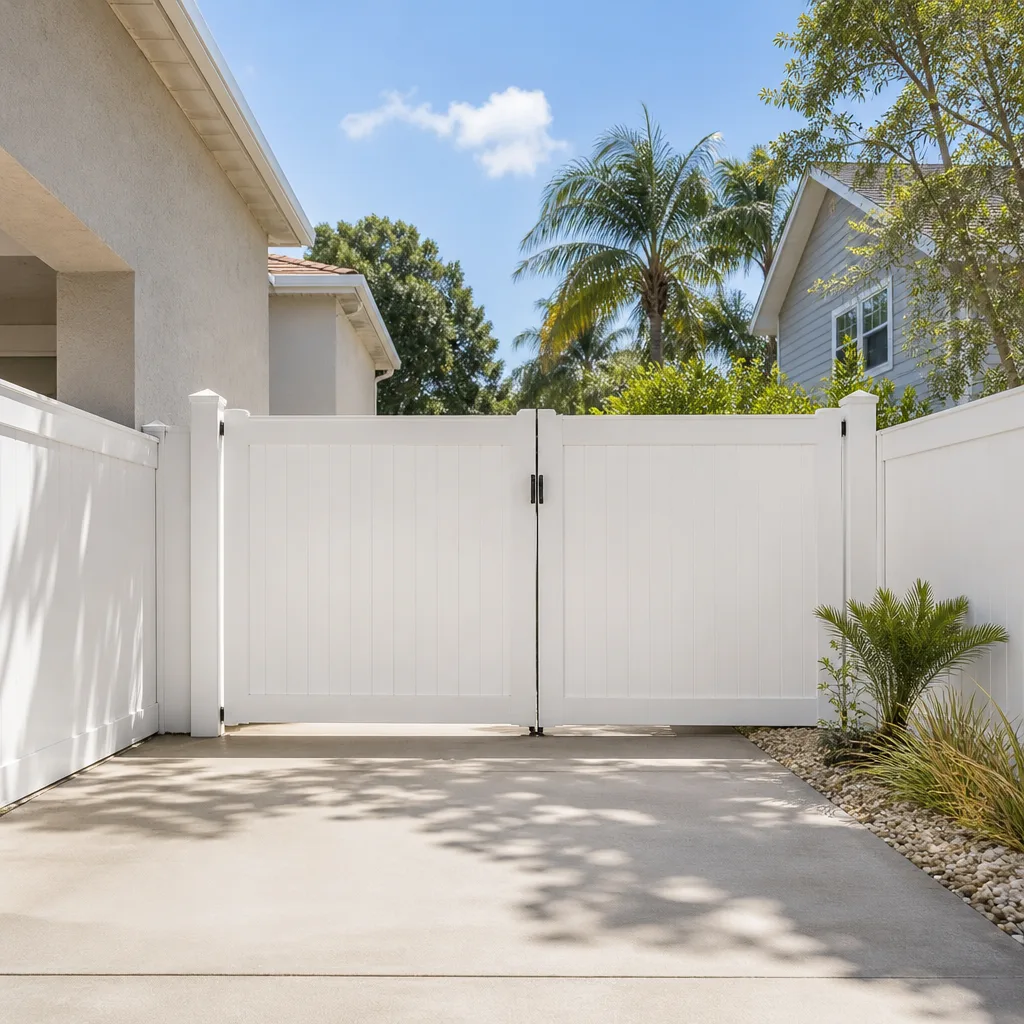
- Fences and gates. Check post plumb and gate swing. Wind damage to fences often shows as posts that have loosened in the ground, not posts that have broken.
- Windows and doors. Open and close every window and door; a house that’s been through a storm can settle enough to throw a frame out of square. Check the perimeter seal inside and outside.
Do this assessment in November, before the dry season planning starts. It’s the bridge between the wet season and the work.
UV, Moisture, and Biological Growth: What Replaces the Freeze-Thaw Cycle
Doral sits at a latitude that gives us intense, sustained sun for most of the year, and the biggest threat to a Doral exterior isn’t expansion and contraction – it’s UV degradation and moisture retention. That’s a different maintenance priority than most of the country.
UV breaks down the chemistry of coatings, sealants, and plastics. Caulk around a window in a cold climate can last ten years; in Doral’s sun, a south-facing caulk joint can fail in four to six. Paint on a south or west elevation fades and chalks faster than on the north. Roof shingles age by granule loss and UV exposure rather than by freeze damage.
Moisture and biological growth follow the same logic. Doral homes on the north and east elevations hold moisture longer because they get less sun. That moisture feeds algae on roofs, mildew on stucco, and in shaded areas, moss in paver joints. The practical maintenance response is to inspect north and east elevations more often than south and west, and to plan for a caulk-and-seal cycle of about every four to six years on sun-exposed joints, rather than the eight-to-ten year cycle common in cooler climates.
The Doral HOA Notification Calendar
Doral’s master-planned communities – and there are many of them along NW 41st Street and NW 107th Avenue – usually require HOA approval before any exterior change, and the approval process takes time. If your maintenance plan involves a change that’s visible from the street, add four to six weeks to your schedule for approval before you book a contractor.
Here’s what typically needs HOA review in a Doral community, which is close to the 30-day advance approval standard that most local association documents set:
- Fence replacement or repair. Material, height, style, and color usually all require approval. If you’re replacing a section, submit the full fence drawing even if only one panel is being repaired.
- Roof replacement or color change. Roofing material and color need written approval.
- Exterior paint. Color and sheen changes need approval; a straight repaint in the existing color sometimes doesn’t, so check your specific HOA documents.
- Driveway replacement or paver re-laying with a color change. Paver color and pattern changes usually need approval.
- Window replacement or a change in window frame color.
Two habits save Doral homeowners trouble here. First, submit the HOA application before you sign a contractor agreement, so the schedule doesn’t move under you. Second, get the approval in writing before the first crew member arrives. If a change order comes up mid-job, that change also goes through the HOA, not around it.
The Wet Season Is Interior Season
May through October is the wrong time for exterior work and the right time for interiors, and that’s how the Doral construction calendar actually runs. A kitchen remodel, a bathroom remodel, an addition, an ADU – all of those are best scheduled in the wet season, because the exterior envelope of the house stays closed while the crew works, and the weather doesn’t create delay after delay.
There’s a bonus: contractors are typically less booked on interior work during the wet season, because everyone else is trying to schedule exterior work in the dry months. That means a kitchen or bath project started in June often moves faster than the same project started in January.
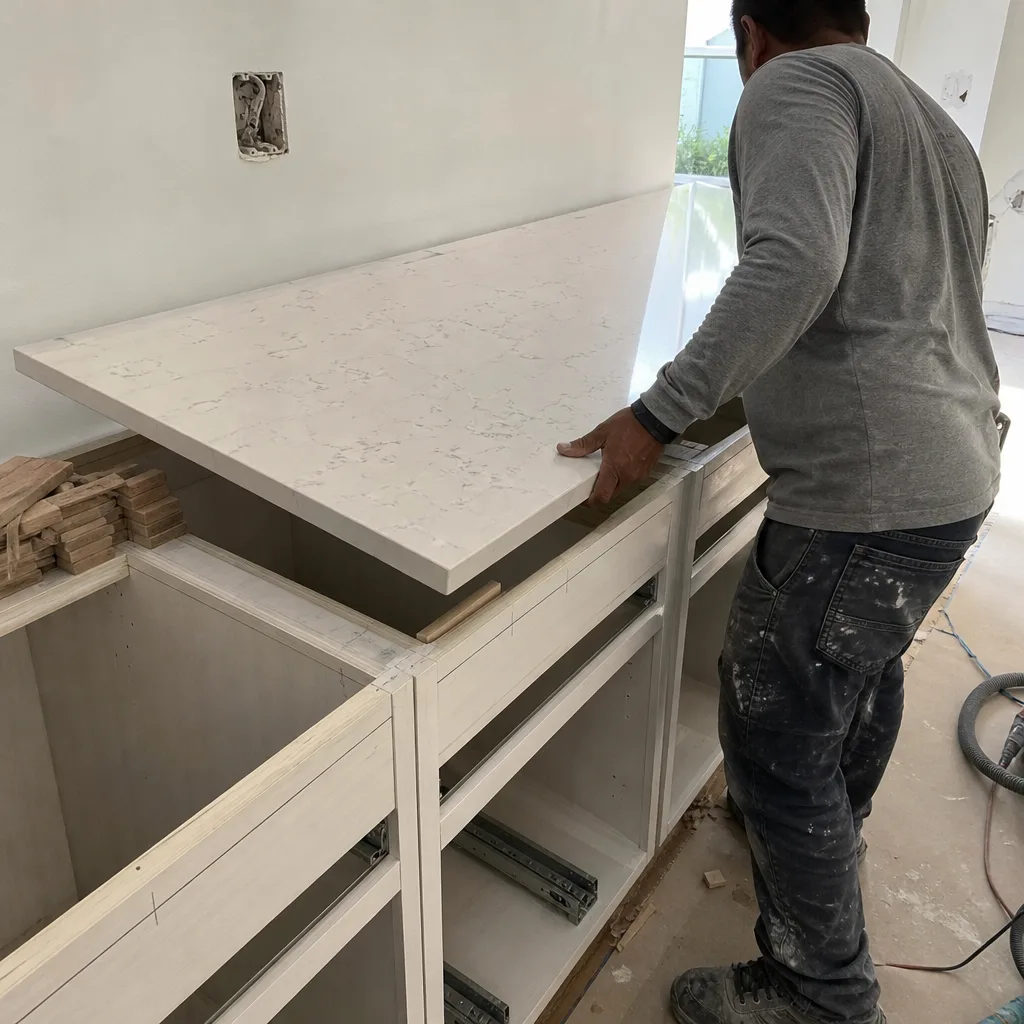
For bathrooms, the material choices matter as much in wet season as in dry. A Schluter waterproofing membrane system on a Doral shower goes in the same way in July as in February, and it should be part of any bathroom that’s being gutted. For kitchens, premium cabinet brands like KraftMaid and stone surfaces like Cambria are what we specify for a project meant to last, and both are worth discussing before you sign anything, because materials decided late are where budgets drift.
If you’re planning a bigger project, the Barrett & Sons Construction Doral home page lays out the full scope of what we do.
Common Mistakes to Avoid
- Waiting until November to fix a flashing problem you noticed in May. Six months of daily rain pushes moisture further into the assembly than the original repair would have faced. By November, the repair scope is larger.
- Scheduling paver or exterior paint work in August. Wet-season cure windows fail even with excellent workmanship. Dry-season scheduling is the difference between a job that lasts and a job that needs callbacks.
- Assuming HOA approval isn’t needed because the change is small. A color change on a fence or a roofline is still visible from the street. The approval takes four to six weeks, and starting without it can force a tear-out.
- Checking only the south and west elevations. Doral’s north and east elevations hold moisture longer. Those are the sides most likely to develop algae and mildew, and the ones to inspect first.
- Treating a post-storm “no visible damage” as a clean bill of health. Wind-lift on shingles and loosened fence posts are both invisible from the ground. A November assessment catches what the eye misses.
- Letting a contractor tell you permits are optional. In Doral, permits are usually required for roof replacement, structural work, additions, and window replacements. The permit inspector works for you, not for the contractor, and skipping the permit means an unpermitted scope on your title later.
- Choosing the cheapest bid because the timing is tight. A cheap bid with no written scope is the setup for an end-of-job surprise invoice. Fixed pricing in writing is the only way to know what you’re actually buying.
When to Call a Professional
Most of the monthly walk-through is homeowner work. A few jobs aren’t, and it’s worth drawing the line clearly. Call a professional for anything on the roof (walking a shingle or tile roof in Doral’s heat is a real fall risk, and a misstep can damage the surface), for anything involving electrical or gas in a remodel or addition, for stucco repair beyond hairline cracks, for any paver or hardscape job where the base needs re-compaction, and for any structural concern – a crack that’s wider at the top than the bottom, a door that suddenly won’t latch, a floor that sounds hollow. Those aren’t homeowner repairs.
Barrett & Sons Construction Doral offers free estimates in Doral – call (833) 734-5128 to schedule one. We pull permits on every eligible job, we write every scope and allowance into the contract, and if a change comes up mid-job, it’s a written change order before anyone picks up a tool.
See the difference
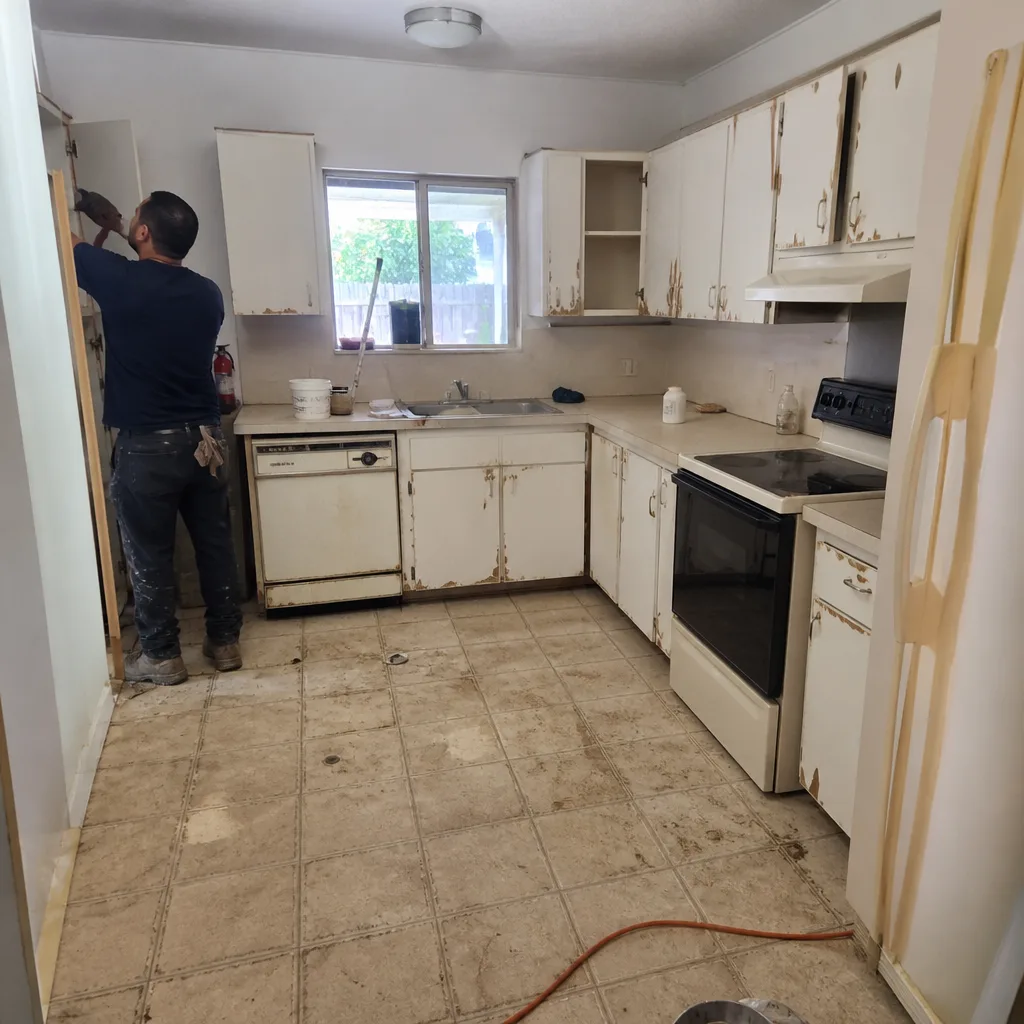 Before
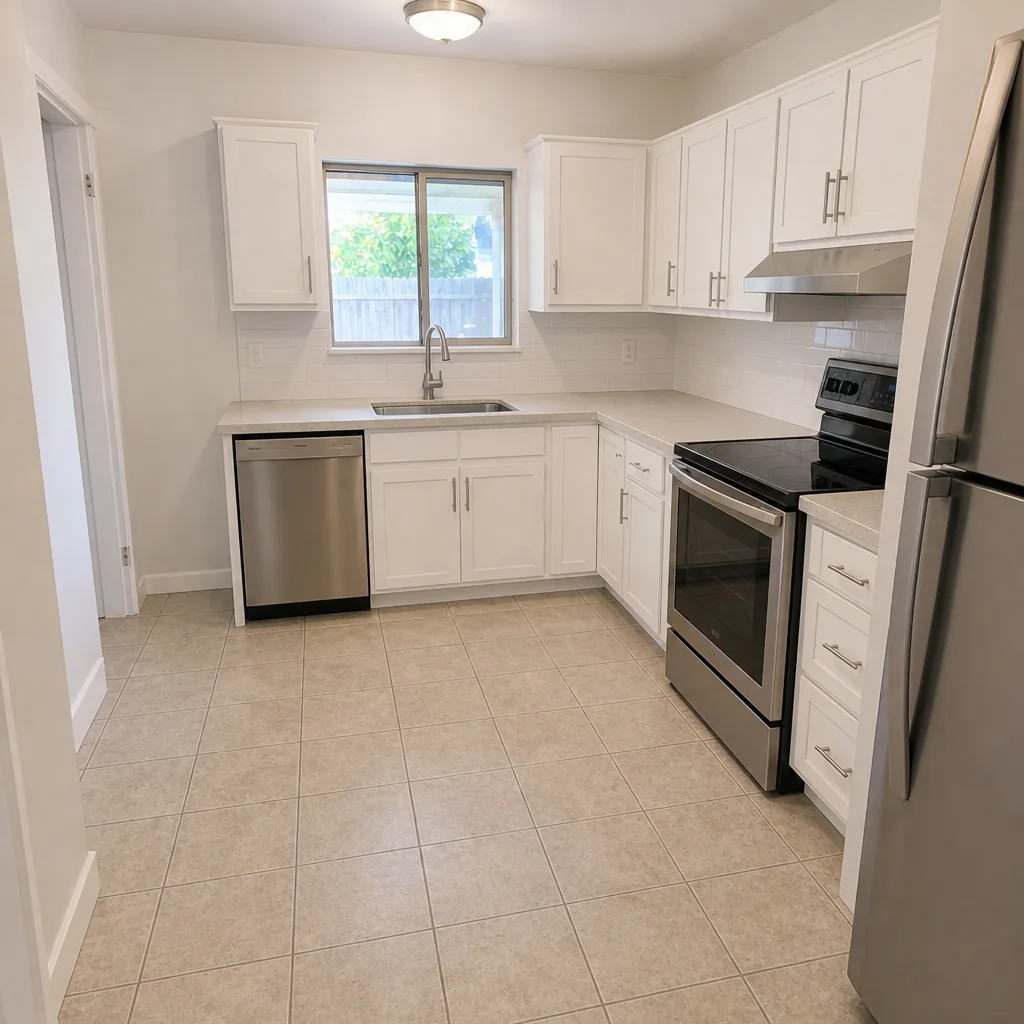 After
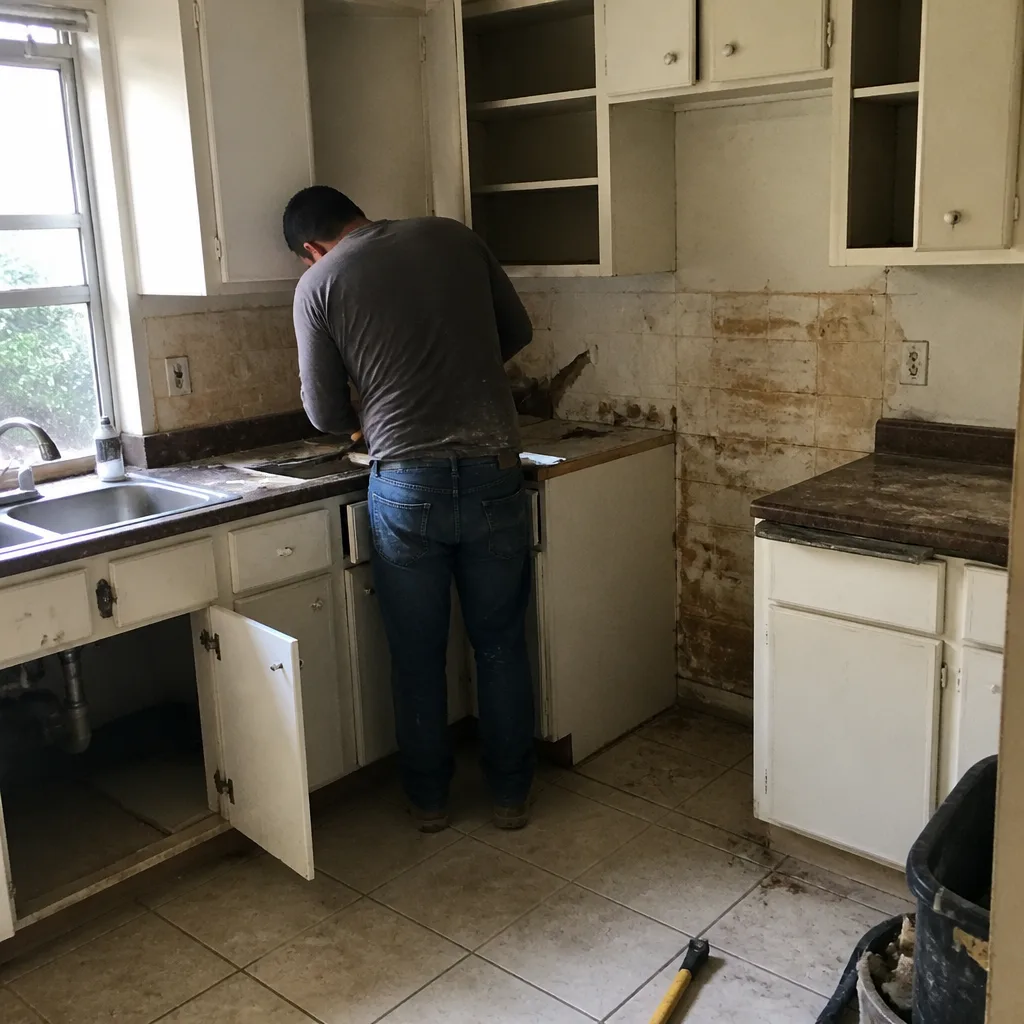 Before
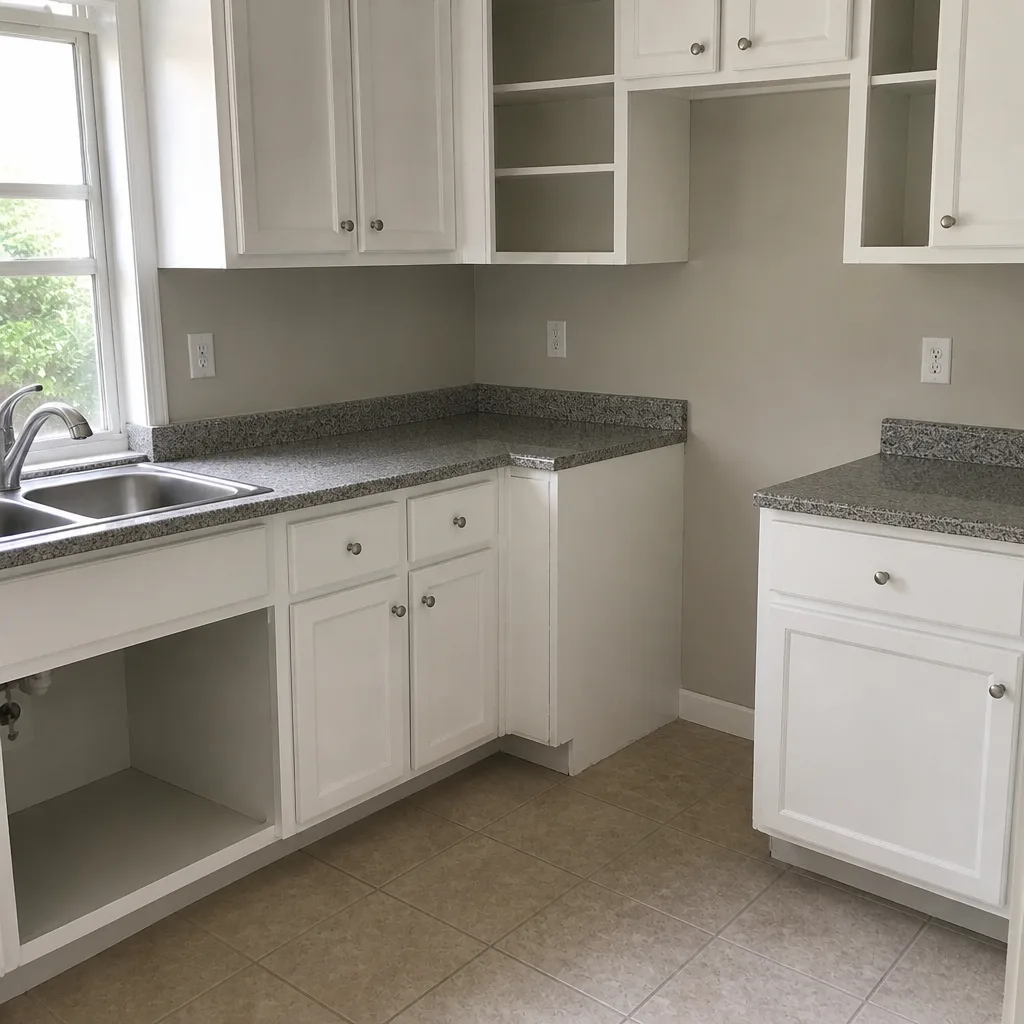 After
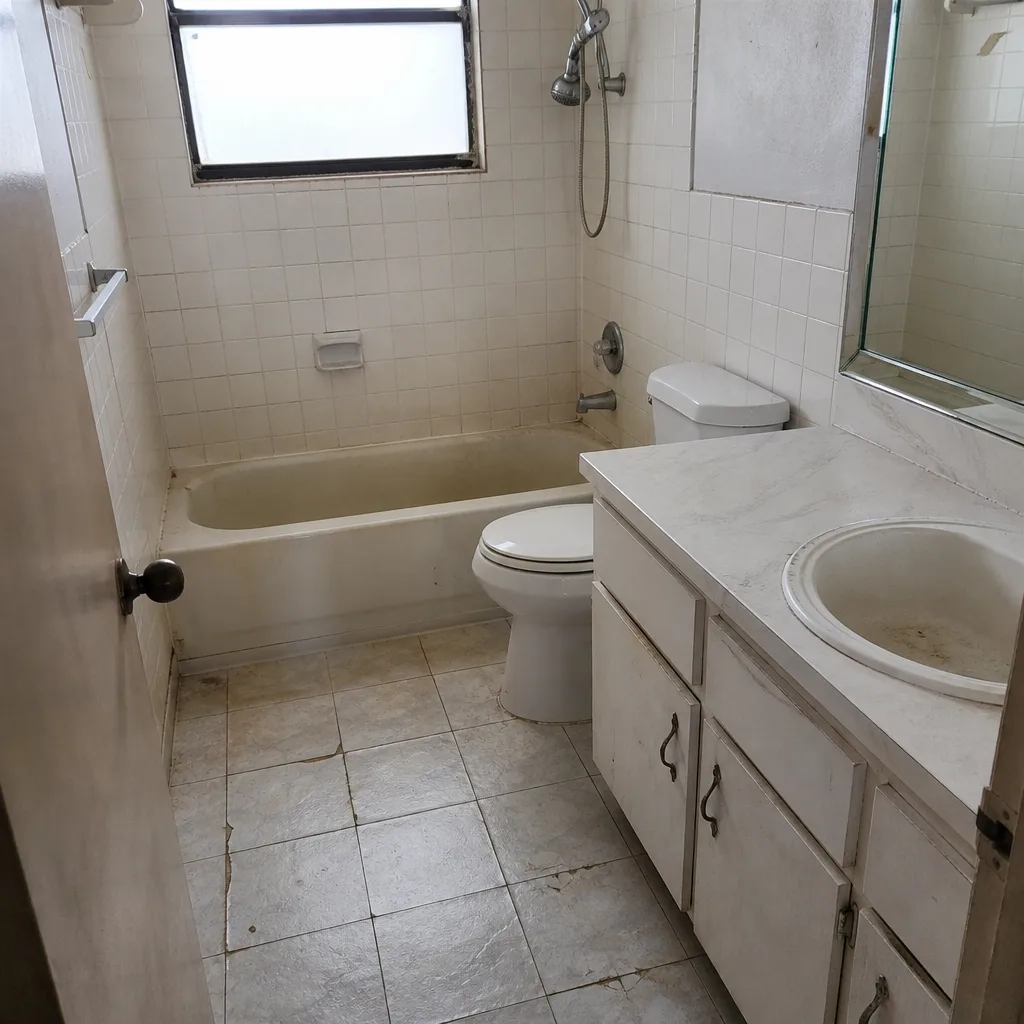 Before
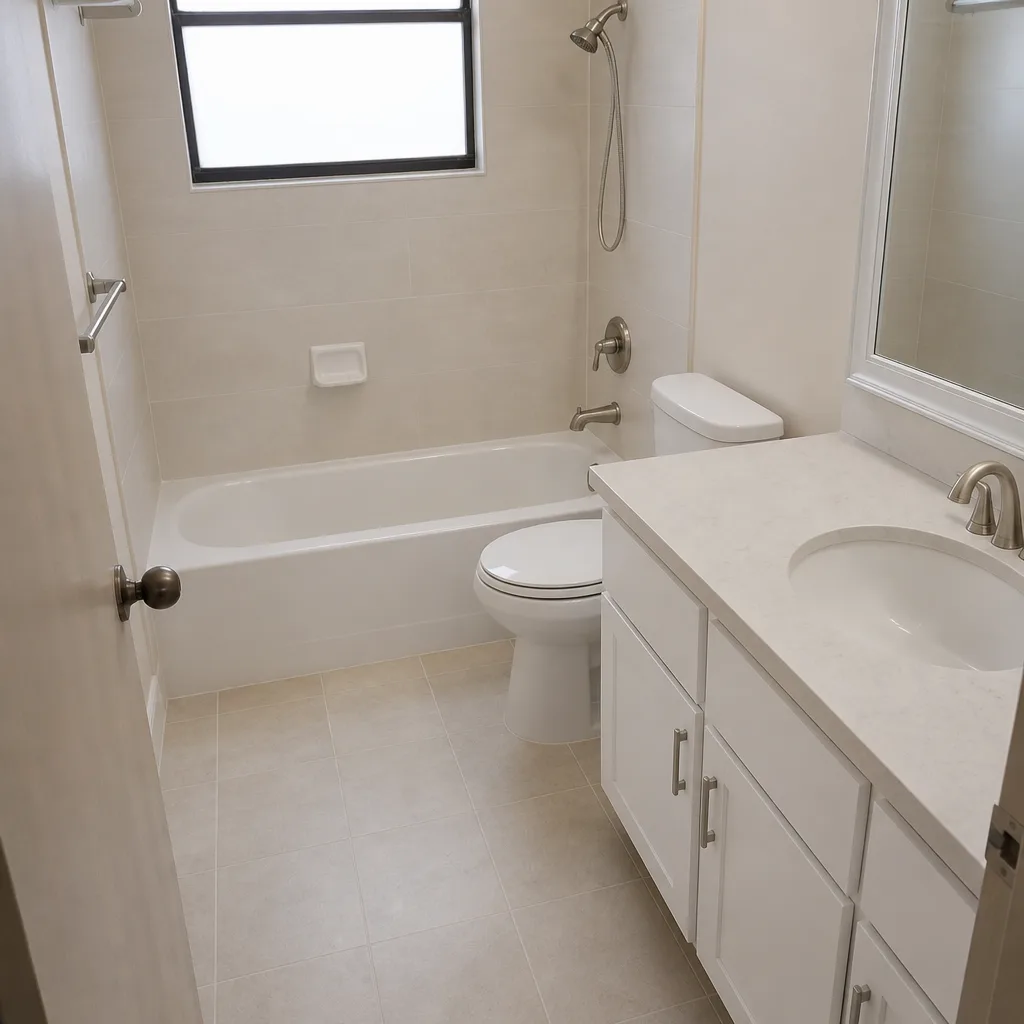 After
Frequently Asked Questions
March, because it’s the last dry month before the wet season. Roof flashing, window caulk, stucco joints, and drainage channels all need to be inspected and repaired in March or April, before the first heavy rain tests them. A Doral homeowner who handles the March checklist usually gets through the wet season without a moisture problem inside the house.
It’s not recommended. Doral’s wet season runs May through October, and the cure windows for paver base, stucco, and exterior paint all require dry weather. A contractor who says the timing doesn’t matter is probably planning to rush the cure or skip it. Wait for the dry season and book early, because the November to April window fills up.
Often yes, even for a repair. Doral’s master-planned communities typically require a written application and 30 days of advance approval for any visible change to a fence, including material, color, or height. Submit the application before signing a contractor agreement, and get the approval in writing before the crew shows up.
Hairline cracks, smaller than the edge of a credit card, are usually cosmetic and should be sealed before the wet season. A crack that’s wider than that, or that’s wider at the top than the bottom, or that follows a window or door corner, is worth professional inspection. Don’t seal it before someone looks at it, because sealing can hide the movement that’s causing it.
January through April. A dry-season roof replacement gets a proper lay-down, a clean seal, and a full inspection before the rains start. A roof installed in August is exposed to hurricane-season rain during the install, which is a risk on both the schedule and the finished product. Plan a roof replacement six to nine months out to hit the dry-season window.
It shouldn’t, if the scope and allowances were written. Every scope, every allowance, and every price change should arrive as a written change order before the work happens, so the final invoice matches the original quote. Ask to see the allowance schedule before you sign; if there isn’t one, you don’t yet have a fixed price. Call (833) 734-5128 for a free second opinion on any written estimate.
The Bottom Line
Doral’s two-season rhythm does most of the scheduling work for you, if you let it. March and April are for the pre-wet-season inspection – roof flashing, window caulk, stucco joints, drainage. The dry season (November through April) is for exterior work: roofs, paint, paver and fence installation, window replacement, and stucco repair. The wet season is for interiors – kitchens, bathrooms, additions, ADU work – and for planning the next dry-season project. Add HOA approval time of four to six weeks to any visible exterior change, and do the post-storm assessment in November so the winter project list is written from facts, not guesses.
For the work that needs a permit, a written scope, and a fixed price, call (833) 734-5128 for a free estimate. We’re Barrett & Sons Construction Doral – a live person answers the phone, every scope and allowance is in writing, and the 90-Day Done Right Promise is on every contract.
Written by the team at Barrett & Sons Construction Doral.