Last updated November 17, 2026


Free written scope consultation - allowances, timeline, and change-order rules on paper before a single trade is scheduled
Fence Installation Troubleshooting: Common Problems and How to Fix Them
A leaning fence post in Doral usually isn’t a wood-rot problem. It’s a footing problem – and filling in around the post with more concrete is the one repair that makes the eventual real fix more expensive. Most of the fence calls we get here trace back to one of three root causes: post depth that doesn’t match our soil, a concrete footing that was undersized from day one, or hardware that was never rated for salt air. Figuring out which one you’re dealing with tells you whether you’re looking at an afternoon of work or a full reinstall. This guide walks you through the diagnosis and the fix, section by section.
Quick Answer
To fix a leaning or failing fence, first identify the root cause – footing heave, shallow post depth, or corroded hardware – because the repair is different for each. A post that leans after heavy rain usually points to soil movement or an undersized footing, while a post that stays straight but wobbles points to loose hardware or a rotted base. In Doral’s sandy, high-water-table soil, most structural fence failures are footing failures, not wood failures, and adding concrete around a post without addressing the cause tends to make the next repair costlier. A proper fix starts with digging down to inspect the actual footing, then resetting or replacing the post to the correct depth.
Styles & brands we work with
- Kitchen remodeling
- Bathroom remodeling
- Home additions & ADU
- Roofing
- Windows & doors
- Driveway & pavers
- Fence
Table of Contents
- How to Diagnose a Leaning Fence Post
- Footing Problems: Depth, Concrete, and Hydrostatic Pressure
- Salt Air Hardware Failure: Why Coastal Doral Eats Standard Screws
- Gate Sag: Four Different Repairs for Four Different Causes
- Panel Warping and Bowing: Cosmetic vs. Structural
- How to Stabilize a Wind-Damaged Section Without Wrecking the Rest
- A Quick Inspection Routine for Doral Fences
How to Diagnose a Leaning Fence Post
The first question isn’t “why is the fence leaning” – it’s “what kind of leaning is it.” Three patterns show up again and again in Doral, and each points to a different fix.
Pattern 1: Footing heave from hydrostatic pressure. This is the post that leans after a stretch of heavy rain, especially in low-lying yards near the canal system or in neighborhoods like Doral Isles where the water table sits close to the surface. The concrete footing itself is being pushed or the soil around it is shifting. You’ll often see a hairline crack in the concrete collar at the base, or the ground around the post will be spongy for days after a storm. Adding concrete to a heaving footing just adds weight to a moving mass.
Pattern 2: Insufficient original footing depth. This is the most common cause we see in fences installed by the cheapest bidder. A post that was set 24 inches deep in soil that needs 36 to 42 inches will lean slowly over a few seasons as the ground shifts under normal load. There’s often no crack at the base and no spongy ground – the post just tips in one direction like it’s been nudged. If you can rock the post by hand from the top and see the base move, the footing was almost certainly undersized.
Pattern 3: Lateral load from vegetation. A bougainvillea, ficus, or palm planted too close to a fence line will push a post over slowly. Roots lift the footing, and the canopy catches wind that loads the top of the fence. You’ll see the damage on the side where the vegetation grows, and the post will lean into or away from the plant. Trimming back the vegetation is part of the fix, not an afterthought.
To sort them out, do this:
- Dig a small hole next to the post at ground level, about 8 inches down.
- Look for the top of the concrete footing. If you can’t find concrete within 8 inches, the footing was likely too shallow.
- Check the soil. Sandy, loose, or waterlogged soil around the base points to heave or undercompaction.
- Wobble the post at the top. If the whole footing moves, it’s structural. If only the post wobbles inside a firm footing, it’s hardware or rot.
- Check the vegetation. A plant within 3 feet of the post is a suspect.
The results tell you the repair. Heave needs drainage and resetting; shallow depth needs a deeper footing and a new post; vegetation needs root management and re-leveling. A general guide to fence installation in Doral covers the correct footing depth for our soil, which is worth reading before you dig.
Footing Problems: Depth, Concrete, and Hydrostatic Pressure
In Doral, the footing is the fence. Get the footing right and the fence lasts. Get it wrong and no amount of hardware or panel is going to save it.
Our soil here is sandy loam with a high water table, and that combination changes the math. In drier, denser soil further inland, a 24-inch footing sometimes holds fine. In Doral, a 24-inch footing in fast-draining sand is asking for a lean within two or three years, especially near the canal banks and in yards that flood during summer thunderstorms. The standard we build to in Doral is a footing at least 36 inches deep, sized to the post, and bell-shaped at the base so the concrete resists heave instead of popping up.
Concrete volume matters just as much as depth. A post set in a hole that’s barely wider than the post itself has almost no lateral resistance. The bare minimum is a footing three times the post’s width in diameter, so a 4×4 post needs an 8 to 10-inch diameter hole, and a 6×6 needs 12 to 14 inches. Anything tighter and the first stiff wind off the Everglades puts a lateral load on the post that the footing can’t take.
Why adding concrete is usually the wrong fix. We get called out to plenty of fences where a well-meaning homeowner (or a handyman) has packed fresh concrete around a leaning post. That works for a week. Then the underlying problem – heave, shallow depth, or a rotted base – keeps moving, and now the post is locked into a heavier footing that’s harder to remove. When a real fix is needed, the crew has to break out all that added concrete and start over. You’ve paid twice.
When we reset a footing, we do it in stages:
- Remove the post and break out the old footing to clean soil.
- Dig the new hole to the correct depth for the post size and soil condition.
- Set a gravel base for drainage, then the post, checked plumb on two axes.
- Pour concrete with a bell-shaped base, and let it cure fully before adding panels or gates.
If the ground around the post stays wet after a storm, drainage is the other half of the repair. A properly installed fence line should shed water away from the posts, not pool at them.
Salt Air Hardware Failure: Why Coastal Doral Eats Standard Screws
Here’s a detail most fence guides skip. Doral is roughly 10 miles from the Atlantic, and the prevailing breeze carries salt air inland. That salt load is enough to corrode standard zinc-plated screws, brackets, and hinges in two to three years. A homeowner sees a fence section sagging, assumes the wood has failed, and doesn’t realize the screws holding the rails to the post have rusted through and let go.
This is what hardware-driven structural failure looks like:
- Rust streaks running down from every screw head, especially on the windward side of the fence.
- Rail-to-post connections that look fine until you press on them, then move.
- Hinges on gates that have darkened, stiffened, or seized entirely.
- Screws that strip out of the hole when you tighten them – the wood is fine, the screw is gone.
- Sagging panels that aren’t caused by footing movement at all.
If you see those signs, the fix isn’t a new fence. It’s re-fastening with the right hardware. For coastal Doral, that means hot-dip galvanized or stainless steel fasteners, not the standard zinc-plated screws from a big-box bucket. It’s a small cost difference on the front end and saves years on the back end. Gates and hinge hardware should be stainless or marine-grade – anything less and you’re replacing it on the same schedule as the last set.
We’ve seen this pattern most often on fences that were installed with a price-first approach, where the panel and post materials are decent but the fasteners are the cheapest available. The materials you can see are only half the story. The hardware you can’t see is what keeps the fence standing through hurricane season. Premium brands matter at the visible end – the same way driveway and pavers in Doral jobs use known hardscape brands – but it’s the hidden hardware that decides whether a fence survives.
Gate Sag: Four Different Repairs for Four Different Causes
A sagging gate is the most common fence complaint we get, and it’s also the most misdiagnosed. The symptom is always the same – the gate drags, binds, or hangs crooked – but the cause lives in one of four places, and each needs a different repair.
Cause 1: The hinge. Rusted, bent, or under-sized hinges let the gate drop on the hinge side. You’ll see the gate’s leading edge sitting low while the hinge-side edge stays put. Fix: replace the hinges with stainless, correctly sized for the gate weight. On a Doral gate, that’s marine-grade or nothing. This is an afternoon job.
Cause 2: The gate frame. The gate itself has started to rack – the rectangle has gone out of square. A gate with only a top and bottom rail and no diagonal brace will do this on its own weight within a few seasons. Fix: add a diagonal brace, rebuild or reinforce the frame, or replace the gate. On a heavy wood gate, the brace is not optional.
Cause 3: The latch post. The gate is fine, the hinges are fine, and the latch simply doesn’t line up. The problem is that the latch post has moved – usually because it wasn’t set as deep as the rest of the line, or because it carries the whole swing load on its own. Fix: reset or replace the latch post with a properly sized footing. Not a cheap job, but sometimes the only one that holds.
Cause 4: The ground under the latch post. The post is holding, but the soil beneath it has settled or washed out. You’ll see the post sitting lower than the rest of the line, often with a visible dip in the soil around the base. Fix: address the drainage that’s moving the soil, then rebuild the footing. If the ground under that corner of the fence is soft after rain, the gate sag is going to come back until the drainage is corrected.
Diagnose in this order: hinge first, frame second, latch post third, ground fourth. Nine times out of ten, the answer is at the top of the list.
Panel Warping and Bowing: Cosmetic vs. Structural
Not every bowed board is a problem, and not every flat one is fine. Wood and vinyl fences both warp, but for different reasons, and the difference between cosmetic and structural matters for whether you fix it now or watch it.
Wood panel warping is usually cosmetic when:
- The bow is under an inch across the width of the board.
- No fasteners have pulled loose from the rail.
- The bow appeared gradually over a season, not overnight.
- The board has no split at the fasteners and no soft spots near the base.
Wood panel warping is structural when:
- Boards twist enough to open gaps wider than a quarter inch between them.
- Screws or nails have pulled free at the rail.
- The board shows a lengthwise split at the fastener line.
- The bottom edge of the board is soft to the touch – that’s rot, not warp.
- Multiple boards in the same section show it at the same height – that usually means a rail has failed.
Vinyl panels bow for a different reason, and it’s almost always heat. Doral summers push daytime temps into the 90s, and a vinyl panel installed tight against the rails with no room for expansion will bow toward the sun. The fix is a re-install with the correct expansion gaps at every fastener. A vinyl panel that’s bowing now but isn’t cracked is fixable; one that has cracked along the fastener line needs replacement.
When you’re sorting out whether a panel needs to come down, check the fasteners, the rails, and the bottom edges. If all three look solid and the bow is mild, leave it alone through the season and reassess. Replacing a panel that’s still doing its job is wasted money.
How to Stabilize a Wind-Damaged Section Without Wrecking the Rest
Summer storms and the occasional tropical system put a real lateral load on a Doral fence, and when a section goes, the natural response is to start pulling things apart. Don’t. A few minutes of temporary stabilization keeps the damage from spreading and keeps your insurance claim cleaner.
Here’s the sequence we use:
- Photograph before you touch anything. Take wide shots of the whole fence line, close shots of the damage, and a shot of the footing at ground level. Insurance adjusters want the before, not just the after.
- Remove the panel or picket that’s already loose. Don’t try to hold a hanging panel up with a strap through the next storm – it becomes a sail and pulls the next post over.
- Brace the adjacent posts, not the damaged one. Drive a temporary stake into the ground a few feet into the yard and run a diagonal brace to the post’s upper third. The goal is to keep the good posts from taking the load from a leaning one.
- Do not pour new concrete into the damaged footing. This is the repair that makes the real fix more expensive later, and it makes the insurance adjuster’s job harder because the original failure is now buried.
- Keep the damaged panel on site if you can. Adjusters sometimes want to see the failed piece, and your contractor will want to see the failure mode.
A temporary brace buys time, not a fix. Once the claim is filed and the storm has passed, the real repair needs the footing dug out and rebuilt, not re-topped. If the fence was already showing signs before the storm – a lean, a wobble, rust streaks – those are worth flagging to the adjuster as pre-existing, since they can affect the claim scope.
A Quick Inspection Routine for Doral Fences
A 10-minute walk of the fence line twice a year catches nearly every problem on this page while it’s still cheap to fix. Here’s the routine we suggest to homeowners across Doral:
- Walk the whole line and push each post. Any post that moves at the top by more than an inch needs a footing inspection.
- Look for rust streaks. Streaks below screw heads and hinges mean the hardware is on its way out.
- Open and close every gate. Binding, dragging, or a latch that no longer lines up is the first sign of a hinge or frame issue.
- Check the base of every post. Soft wood at the bottom of a post is rot – catch it early and it’s a post replacement, not a section rebuild.
- Look down the line from one end. A fence that waves is usually several shallow or heaving footings, not one.
- Inspect after every named storm. Even a glancing blow from a tropical system can move sandy Doral soil enough to start a lean.
If you find something and you’re not sure whether it’s a this-month problem or a next-year problem, that’s a good reason to get a second opinion before you spend. Our Barrett & Sons Construction Doral home page has the full range of what we handle, and our home additions and ADU in Doral work runs into fence lines often enough that we know the local soil and drainage well.
Common Mistakes to Avoid
- Packing concrete around a leaning post. It hides the symptom for a week, adds weight to a footing that’s already moving, and doubles the labor cost when the real fix happens.
- Using standard zinc-plated screws in Doral. They fail in two to three years in our salt air, and when they do, the fence looks structurally failed even though the wood is fine.
- Setting posts too shallow for our soil. A 24-inch footing works inland. In Doral’s sandy, high-water-table ground, it’s asking for a lean within a few seasons.
- Rebuilding a gate without diagnosing the cause. If the latch post is moving, a new gate sags inside a month. Fix the cause, not the symptom.
- Pulling apart a storm-damaged fence before insurance sees it. Photos first, temporary bracing second, repairs third – in that order.
- Assuming a bowing vinyl panel is a bad panel. Usually it’s a bad install with no room for expansion. Reinstalling with the right gaps is a fraction of the cost of replacement.
- Ignoring drainage. A fence line that pools water after every storm will keep failing at the same posts, no matter how many times they’re reset.
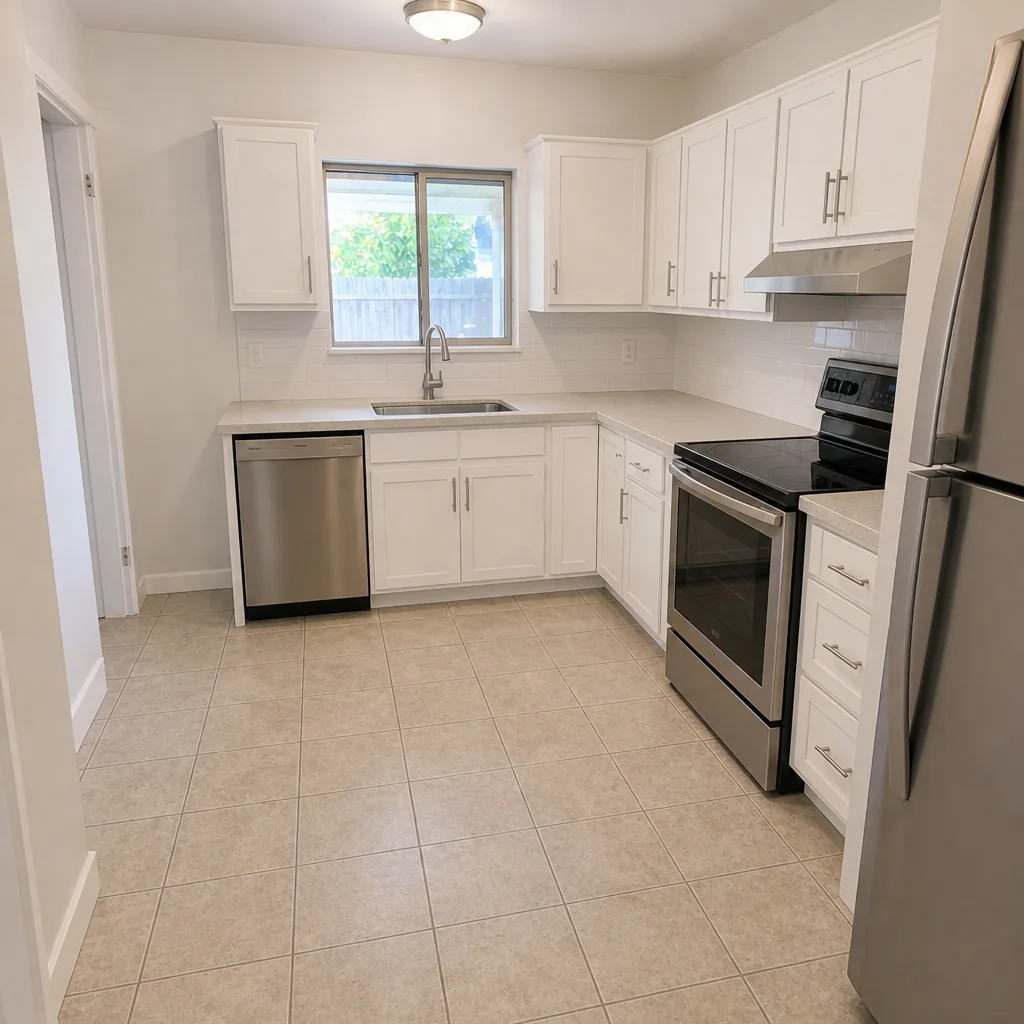
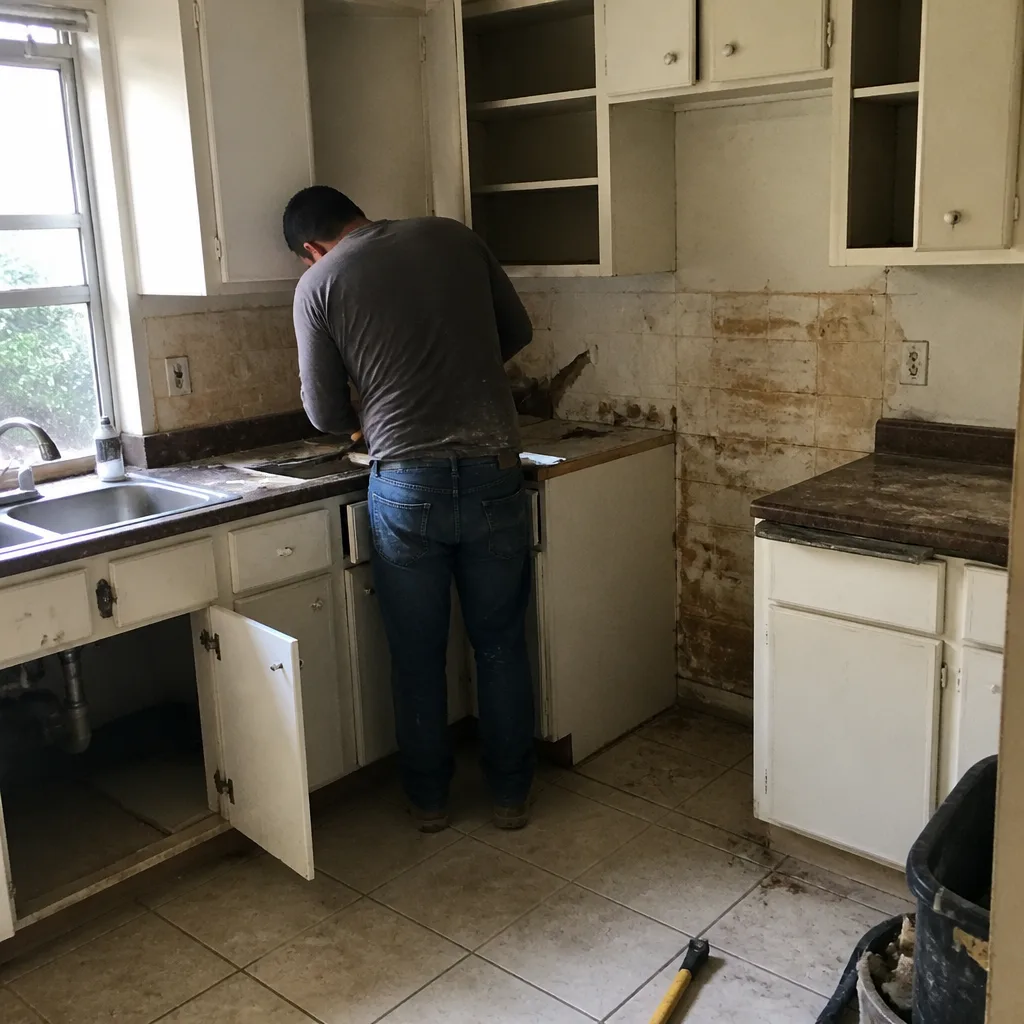
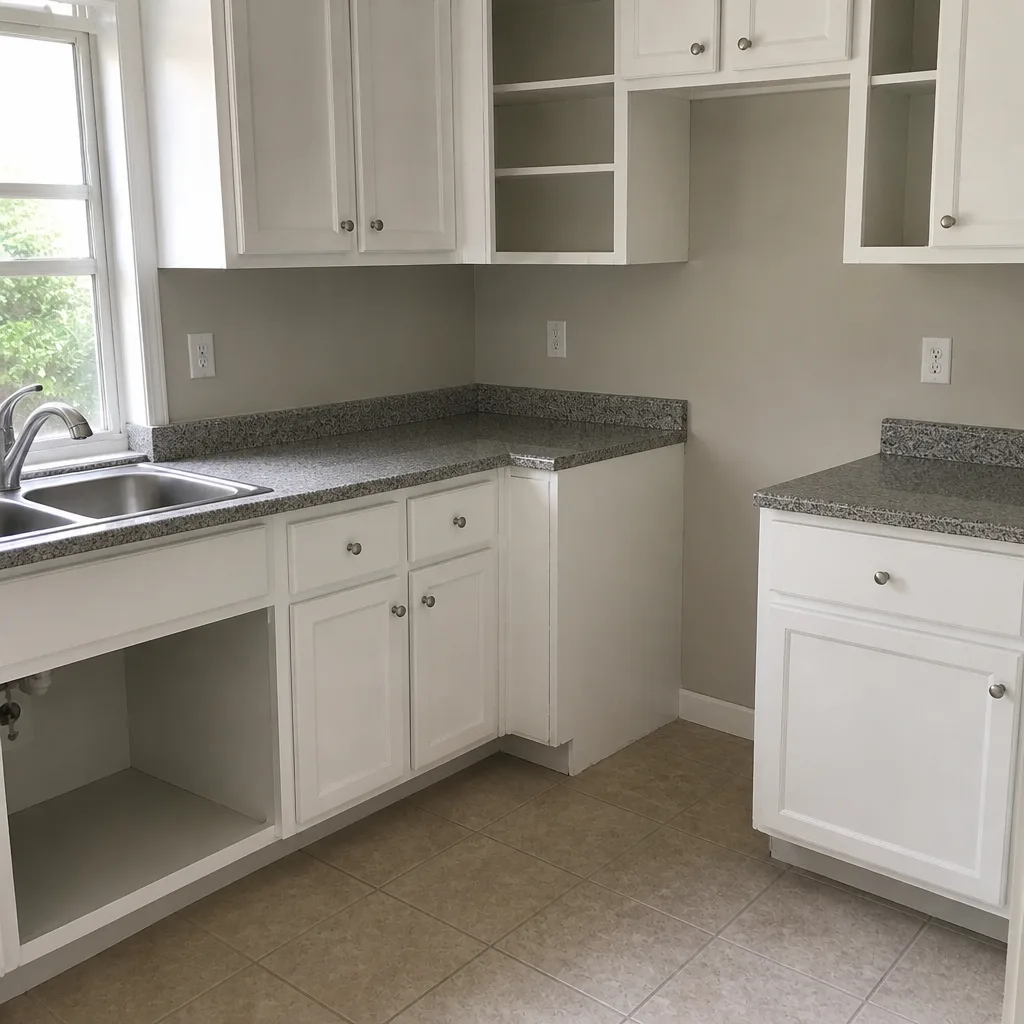
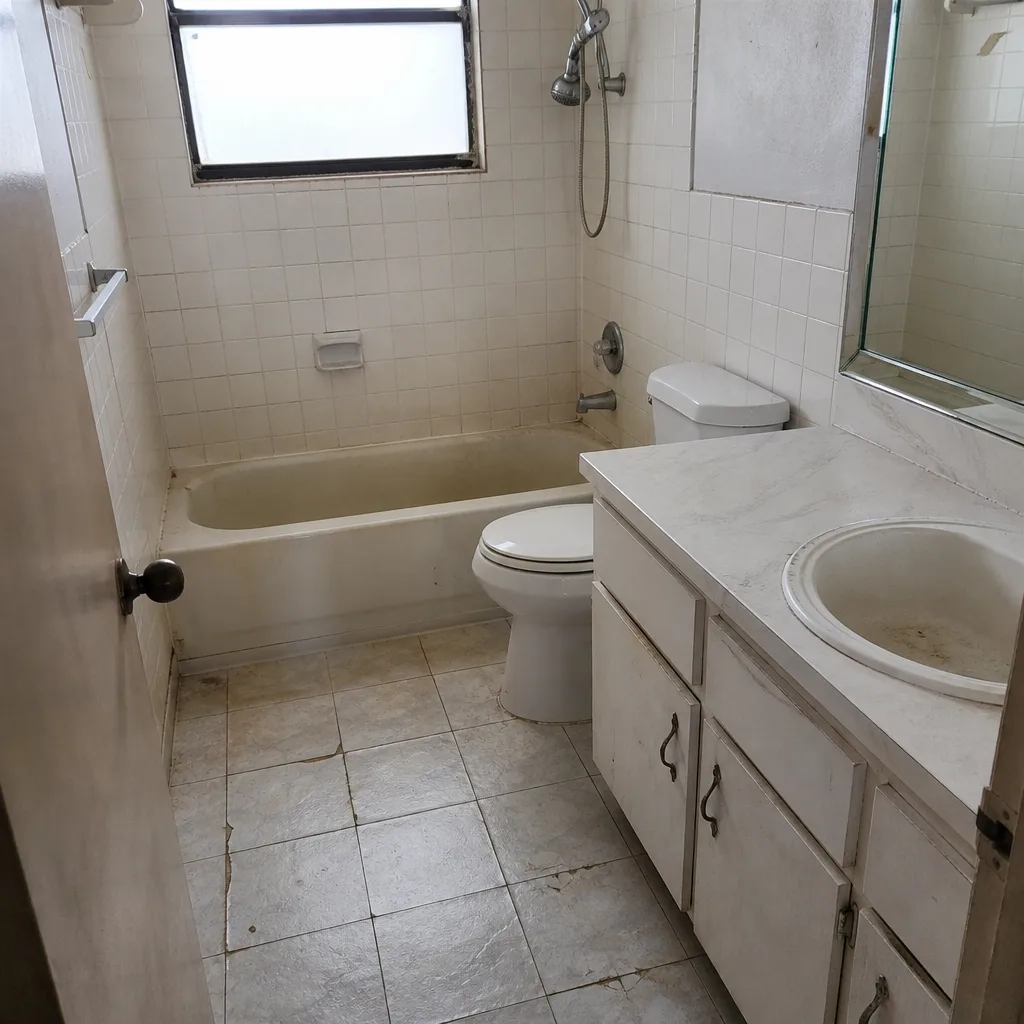
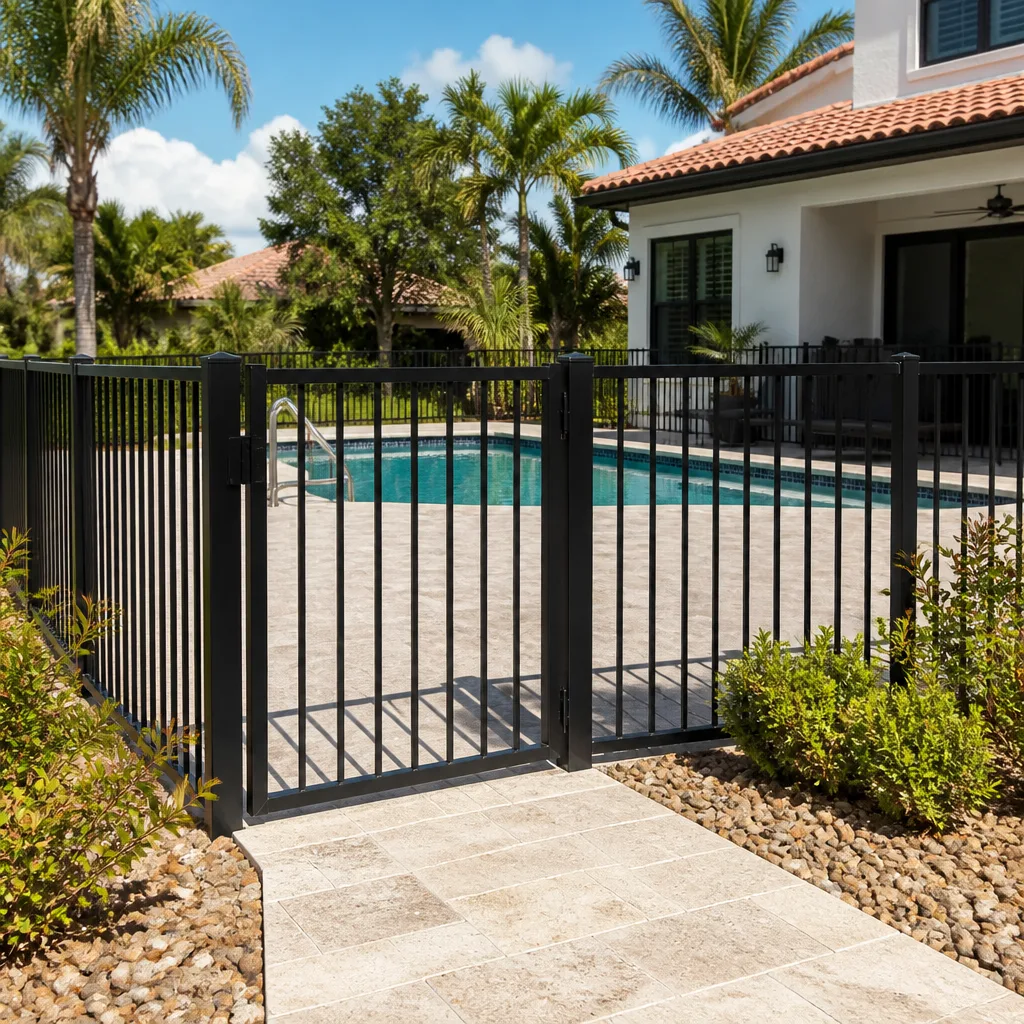
See the difference
 Before
 After
 Before
 After
 Before
 After
When to Call a Professional
Some fence fixes are a homeowner weekend. Footing work, gate frame rebuilds, and anything involving a post that’s moved at ground level are not. Call a pro when a post wobbles more than an inch at the top, when a footing shows a crack or the ground around it stays spongy after rain, when a gate needs the latch post reset or replaced, when hardware has corroded to the point of failure, or when a storm-damaged section needs more than a temporary brace. Barrett & Sons Construction Doral offers free estimates in Doral – call (833) 734-5128. We pull permits where they apply, hand you a written scope before any work starts, and back the repair with our 90-Day Done Right Promise. If something’s wrong after we finish, one call brings us back.
Frequently Asked Questions
Resetting a single post with a proper footing in Doral typically runs a few hundred dollars per post, and a full-section rebuild where multiple footings have failed runs into the thousands. The exact number depends on whether the old footing has to be broken out, whether the post itself can be reused, and what the drainage situation looks like. We give written, line-item estimates before any work starts – call (833) 734-5128 for a free estimate.
Salt air from the Atlantic carries about 10 miles inland to Doral, and it corrodes standard zinc-plated screws and hinges within two to three years. The fix is replacing them with hot-dip galvanized or stainless steel fasteners, including on the gate hardware. It’s a modest cost difference that buys years of service.
No – and it’s the fix we most often have to undo. Adding concrete around a post that’s leaning because of heave, shallow depth, or a rotted base hides the symptom for a short time and turns a straightforward repair into a bigger job when the underlying problem keeps moving. The correct fix starts with digging out and rebuilding the footing.
At least 36 inches for standard residential fence posts, with the hole sized to about three times the post’s width and bell-shaped at the base. Our sandy, high-water-table soil doesn’t hold a shallow footing the way denser inland soil does, which is why the cheapest bid in Doral is often the one that fails first.
Check the hinge side first. If the gate’s leading edge is low but the hinge edge is where it should be, it’s the hinges – replace them with stainless hardware and you’re done. If the gate frame is out of square, the gate needs bracing or replacement. If the latch post has moved, the gate is fine and the post is the problem. Each repair is different, which is why we diagnose before we quote.
Often, yes, though it depends on your policy and the deductible. Photograph the damage before you touch anything, keep the damaged panels on site, and get a written estimate from a licensed contractor. We can provide that written scope and pull any permits the repair requires, and we can offer a free second opinion on any written estimate you’ve already received.
The Bottom Line
Most failing fences in Doral come down to three root causes: post depth that doesn’t match our sandy, high-water-table soil; concrete footings sized too small from day one; and hardware that was never rated for coastal salt air. Diagnose before you repair – hinge, frame, latch post, ground, in that order for gates; footing, depth, vegetation for posts. Skip the concrete-over-the-lean trick, replace zinc-plated hardware with stainless, and brace storm-damaged sections instead of tearing them apart. Get the footing right and the fence stands. Get it wrong and the repair comes back twice as expensive.
Barrett & Sons Construction Doral is owner-operated, and every price change arrives as a written change order before any work touches the job – no surprise invoices at the end. Every eligible fence job gets permits pulled and inspections signed, and every completed job is backed by our written 90-Day Done Right Promise. Call (833) 734-5128 to schedule your free estimate. A live person answers, day or night.
Written by the team at Barrett & Sons Construction Doral.